Mastering Investment Risk Assessment: Your 2026 Beginner’s Guide
Navigate the complexities of investment risks in 2026 with this comprehensive beginner's guide. Understand market, credit, and liquidity risks, and develop a robust framework for smarter financial decisions.
By: Lara Barbosa on March 19, 2026
Last updated on: July 31, 2026
Mastering Investment Risk Assessment: Your 2026 Beginner’s Guide
Mastering Investment Risk Assessment: Your 2026 Beginner’s Guide
Investing can be a powerful tool for wealth creation, but it’s rarely a straight line to financial freedom. Every investment, no matter how promising, carries an inherent degree of risk. For beginners, the sheer volume of information and the complexity of financial markets can be daunting. Understanding and effectively managing these risks is not just advisable; it’s absolutely crucial for long-term success. As we look towards 2026, the global economic landscape continues to evolve, presenting both new opportunities and new challenges for investors. This guide is designed to equip you with a practical framework for investment risk assessment, focusing on three fundamental types: market risk, credit risk, and liquidity risk. By the end of this article, you will have a clearer understanding of how to identify, evaluate, and mitigate these risks, empowering you to make more informed and confident investment decisions.
The journey of an investor is often characterized by learning, adapting, and continuously refining one’s strategy. For those new to the world of finance, the concept of risk can seem abstract or overwhelming. However, breaking it down into manageable components makes it much easier to comprehend and address. Our focus on investment risk assessment will provide a structured approach, helping you to move beyond gut feelings and towards data-driven analysis. We will explore real-world examples and practical tips that you can immediately apply to your own investment portfolio. Whether you’re considering stocks, bonds, real estate, or other asset classes, the principles outlined here will form a solid foundation for your financial endeavors in 2026 and beyond.
Don’t let the fear of risk paralyze your investment ambitions. Instead, embrace knowledge as your most powerful asset. A well-executed investment risk assessment strategy can transform potential threats into calculated opportunities. Let’s dive in and demystify the world of investment risk.
Understanding the Fundamentals of Investment Risk Assessment
Before we delve into specific risk types, it’s essential to grasp the fundamental concept of investment risk. In simple terms, investment risk refers to the possibility that an investment’s actual return will be different than expected. This includes the possibility of losing some or all of your initial investment. Risk and return are inherently linked; generally, higher potential returns come with higher risks, and vice versa. The goal of effective investment risk assessment is not to eliminate risk entirely – which is often impossible – but rather to understand it, quantify it, and manage it in a way that aligns with your financial goals and personal risk tolerance.
For beginners, identifying your personal risk tolerance is the first critical step. Are you comfortable with significant fluctuations in your portfolio for the chance of substantial gains, or do you prefer a more stable, albeit slower, growth trajectory? Your age, financial obligations, income stability, and investment horizon all play a role in determining your appropriate risk level. A young investor with decades until retirement might comfortably take on more risk than someone nearing retirement who needs to preserve capital. This self-assessment forms the bedrock of any sound investment risk assessment strategy.
Moreover, diversification is a cornerstone of risk management. The old adage, “Don’t put all your eggs in one basket,” holds immense truth in investing. Spreading your investments across various asset classes, industries, and geographical regions can help mitigate the impact of poor performance in any single area. While diversification doesn’t guarantee profits or protect against all losses, it significantly reduces the overall risk profile of your portfolio. As we navigate 2026, diversification will remain a vital component of robust investment risk assessment, especially given the interconnectedness of global markets and potential geopolitical shifts.
Another crucial aspect is understanding the time horizon of your investments. Short-term investments are generally more susceptible to market volatility than long-term investments. Over longer periods, market fluctuations tend to smooth out, and the power of compounding can truly take effect. Therefore, when conducting your investment risk assessment, always consider how long you plan to hold an asset. This perspective helps in choosing appropriate investments and managing expectations regarding their performance.
Finally, continuous monitoring and rebalancing are integral to ongoing risk management. Financial markets are dynamic, and what was a suitable investment yesterday might not be tomorrow. Regularly reviewing your portfolio, assessing current market conditions, and rebalancing your asset allocation to maintain your desired risk level are all part of an effective investment risk assessment process. This proactive approach ensures your portfolio remains aligned with your goals and risk tolerance, adapting to new information and market realities.
Type 1: Market Risk (Systematic Risk) – Navigating the Tides of 2026
Market risk, often referred to as systematic risk, is perhaps the most widely recognized form of investment risk. It refers to the risk of losses due to factors that affect the overall performance of financial markets, rather than risks specific to a particular company or asset. These factors can include economic recessions, political instability, natural disasters, interest rate changes, and major global events. Market risk cannot be eliminated through diversification because it impacts virtually all investments to some degree. However, it can be managed and mitigated through careful investment risk assessment and strategic asset allocation.
Understanding the Drivers of Market Risk in 2026
Economic Cycles: Global economies operate in cycles of expansion and contraction. A recession, for instance, typically leads to a broad decline in stock prices as corporate earnings fall and consumer spending slows. Monitoring economic indicators like GDP growth, inflation rates, and employment figures is crucial for anticipating these shifts as part of your investment risk assessment.
Interest Rate Changes: Central banks use interest rates as a tool to control inflation and stimulate economic growth. Rising interest rates can make fixed-income investments more attractive, potentially drawing capital away from equities and leading to stock market declines. They also increase borrowing costs for companies, impacting their profitability.
Geopolitical Events: Wars, trade disputes, and political instability in major global regions can send shockwaves through financial markets. These events create uncertainty, leading investors to flee riskier assets in favor of safer havens. The interconnectedness of global supply chains means a localized conflict can have far-reaching economic consequences, a key consideration for investment risk assessment in 2026.
Inflation: A sustained rise in the general price level of goods and services erodes the purchasing power of money over time. High inflation can negatively impact investments, especially fixed-income securities, as the real return diminishes. Understanding inflation trends is vital for accurate investment risk assessment.
Technological Disruption: While often a source of growth, rapid technological advancements can also create market risk by rendering existing industries or business models obsolete. Investors must be aware of these disruptive forces and their potential impact on portfolio holdings.
Strategies for Mitigating Market Risk
While you can’t escape market risk entirely, you can certainly soften its blow. Here are some strategies for your investment risk assessment:
Diversification Across Asset Classes: Beyond just different stocks, diversify across asset classes like stocks, bonds, real estate, and commodities. These assets often react differently to market events, providing a natural hedge. For example, bonds may perform well during economic downturns when stocks are struggling.
Dollar-Cost Averaging: This strategy involves investing a fixed amount of money at regular intervals, regardless of market fluctuations. When prices are high, your fixed amount buys fewer shares; when prices are low, it buys more. Over time, this averages out your purchase price and reduces the impact of market volatility, a practical application of investment risk assessment.
Long-Term Perspective: As mentioned earlier, market downturns are often temporary. Investors with a long-term horizon can ride out these periods, allowing their investments time to recover and grow. Panicking and selling during a downturn often locks in losses.
Hedging Strategies: More sophisticated investors might use derivatives like options or futures to hedge against market downturns. However, these instruments are complex and carry their own risks, making them generally unsuitable for beginners without significant research and understanding.
Stay Informed but Avoid Overreacting: Keep abreast of economic news and market trends, but resist the urge to make impulsive decisions based on daily headlines. A well-thought-out investment risk assessment plan should guide your actions, not fleeting market sentiment.
Type 2: Credit Risk (Default Risk) – Assessing the Solvency of Your Investments
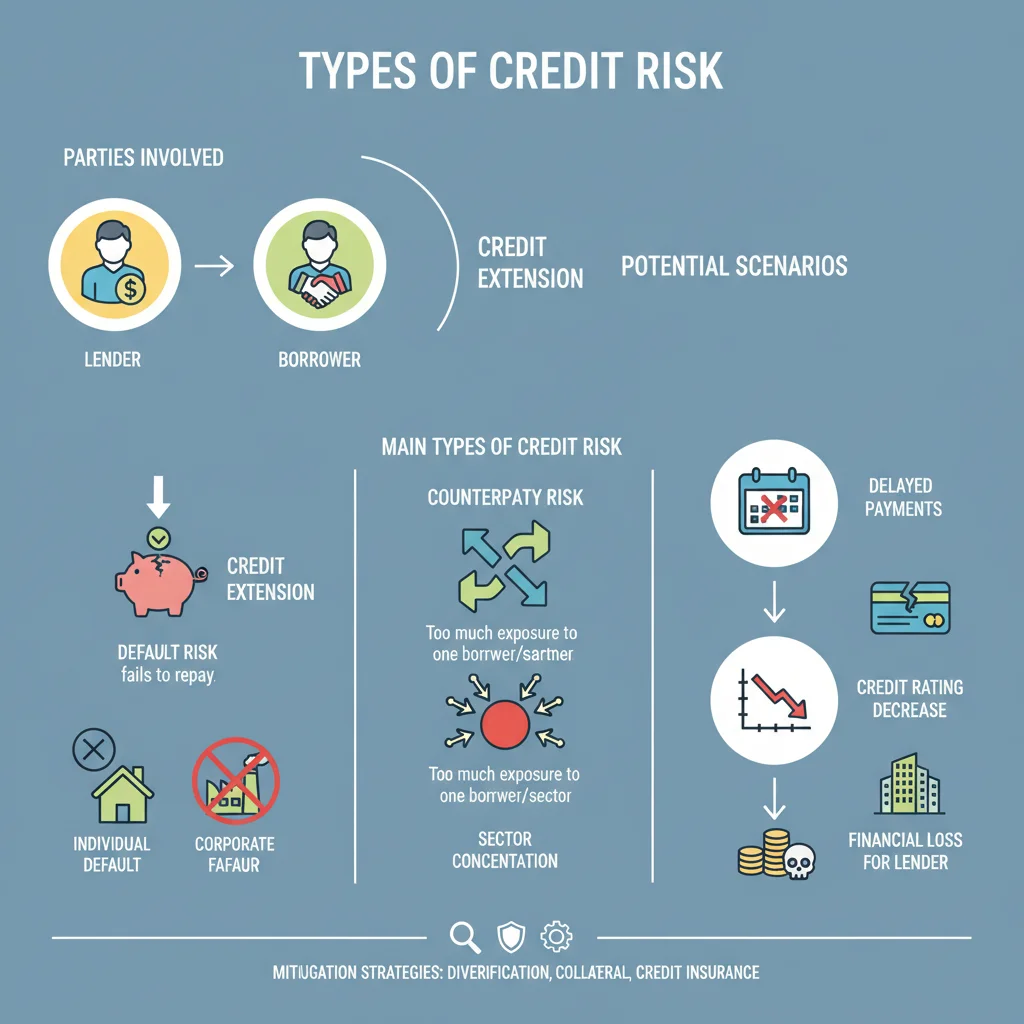
Credit risk, also known as default risk, is the risk that a borrower will fail to make timely payments of interest or principal on a debt. This type of risk is most relevant when investing in fixed-income securities like bonds, but it can also apply to other forms of lending or even evaluating the financial health of a company whose stock you own. When you buy a bond, you are essentially lending money to a government, corporation, or municipality. The creditworthiness of that entity directly impacts the safety of your investment. A thorough investment risk assessment must include a detailed analysis of credit risk.
Key Aspects of Credit Risk in 2026
Corporate Bonds: Companies issue bonds to raise capital. The credit risk associated with a corporate bond depends on the issuing company’s financial health, its ability to generate cash flow, and its overall debt load. Companies with strong balance sheets and consistent profits generally have lower credit risk.
Government Bonds: While often considered very safe, even government bonds carry some degree of credit risk, especially those issued by less stable economies. The risk of a government defaulting on its debt is typically low for developed nations but can be a significant concern in emerging markets.
Municipal Bonds: Issued by state and local governments, municipal bonds finance public projects. Their credit risk varies depending on the financial health of the issuing municipality and the specific revenue streams backing the bond.
Credit Ratings: Independent credit rating agencies (like Standard & Poor’s, Moody’s, and Fitch) assess the creditworthiness of bond issuers and assign ratings. These ratings provide a quick snapshot of an entity’s ability to meet its financial obligations. Higher ratings (e.g., AAA, AA) indicate lower credit risk, while lower ratings (e.g., BB, B, C) indicate higher credit risk. Understanding these ratings is a fundamental part of investment risk assessment.
Strategies for Mitigating Credit Risk
Managing credit risk involves careful selection and ongoing monitoring. Here’s how to incorporate it into your investment risk assessment:
Research Credit Ratings: Always check the credit ratings of any bond or debt instrument you consider. While not foolproof, they offer a professional assessment of default probability. For beginners, sticking to investment-grade bonds (rated BBB- or higher by S&P/Fitch, or Baa3 or higher by Moody’s) is a prudent strategy.
Diversify Bond Holdings: Just as with stocks, diversify your bond portfolio. Invest in bonds from different issuers, industries, and even countries to avoid over-reliance on a single entity’s creditworthiness. This is crucial for comprehensive investment risk assessment.
Analyze Financial Statements: For corporate bonds, delve into the company’s financial statements. Look for strong cash flow, manageable debt levels, and consistent profitability. Key metrics include debt-to-equity ratio and interest coverage ratio.
Understand the Issuer’s Economic Environment: For municipal and government bonds, understand the economic health of the issuing entity. A city facing significant budget deficits or a country with a struggling economy will inherently carry higher credit risk.
Consider Bond Funds/ETFs: For beginners, investing in bond mutual funds or Exchange Traded Funds (ETFs) can be an excellent way to gain diversified exposure to fixed-income markets without having to individually vet dozens of bonds. These funds are managed by professionals who conduct ongoing credit investment risk assessment.
Monitor News and Events: Stay updated on any news or events that could impact the financial stability of the bond issuers in your portfolio. A change in management, a major lawsuit, or a shift in government policy can all affect creditworthiness.
Type 3: Liquidity Risk – Ensuring Access to Your Capital
Liquidity risk is the risk that you won’t be able to sell an investment quickly enough at a fair market price when you need to. An illiquid investment is one that cannot be easily converted into cash without a significant loss in value or a substantial delay. While often overlooked by beginners, understanding liquidity risk is a critical component of effective investment risk assessment, especially when planning for future financial needs or emergencies.
Factors Influencing Liquidity Risk in 2026
Market Depth: Highly liquid assets, like publicly traded stocks of large companies or widely traded government bonds, have deep markets with many buyers and sellers. This makes it easy to execute trades without significantly impacting the price. Illiquid assets, such as private equity, venture capital, or certain real estate properties, have fewer potential buyers and longer transaction times.
Transaction Costs: Selling illiquid assets often incurs higher transaction costs, such as brokerage fees, legal fees, or real estate commissions. These costs can eat into your returns and are an important consideration in investment risk assessment.
Economic Conditions: During times of economic stress or financial crisis, market liquidity can dry up across various asset classes. Even typically liquid assets might become harder to sell at fair prices, exacerbating liquidity risk.
Investment Structure: Some investments are inherently illiquid due to their structure, such as limited partnership interests or investments with lock-up periods. Always understand the terms and conditions regarding selling your investment.
Strategies for Mitigating Liquidity Risk
Balancing potential returns with the need for access to your capital is key. Here’s how to manage liquidity risk as part of your investment risk assessment:
Maintain an Emergency Fund: Before investing in anything potentially illiquid, ensure you have a readily accessible emergency fund (typically 3-6 months of living expenses) in a highly liquid account, such as a savings account or money market fund. This prevents you from being forced to sell investments at an inopportune time.
Diversify by Liquidity: Don’t put all your capital into illiquid assets. Maintain a mix of highly liquid investments (e.g., cash, publicly traded stocks, ETFs) and potentially less liquid ones (e.g., real estate, private investments) based on your financial goals and time horizon. This is a crucial aspect of comprehensive investment risk assessment.
Understand Lock-Up Periods: For alternative investments, be aware of any lock-up periods during which you cannot redeem your investment. Factor this into your financial planning.
Assess Exit Strategies: Before investing in an illiquid asset, understand the potential exit strategies. How easy will it be to sell? Are there established secondary markets? What are the typical transaction times and costs?
Match Liquidity to Time Horizon: Align the liquidity of your investments with your anticipated need for the funds. If you need money in the short term, stick to highly liquid assets. For long-term goals, you might tolerate some illiquidity for potentially higher returns. This thoughtful approach to investment risk assessment can prevent future headaches.
Consider Exchange-Traded Alternatives: For asset classes that can be illiquid (like real estate), consider exchange-traded alternatives such as Real Estate Investment Trusts (REITs) or commodity ETFs. These offer exposure to the underlying asset class with the added benefit of being traded on stock exchanges, providing greater liquidity.
Building Your Personal Investment Risk Assessment Framework for 2026
Now that we’ve explored the three core types of risk – market, credit, and liquidity – it’s time to synthesize this knowledge into a practical framework for your own investment risk assessment. This isn’t a one-size-fits-all solution; rather, it’s a guide to help you build a personalized strategy that evolves with your financial journey.
Step 1: Define Your Financial Goals and Time Horizon
Before you even think about specific investments, clearly articulate what you’re investing for. Is it a down payment on a house in five years, retirement in thirty years, or something else? Your goals will dictate your time horizon, which in turn significantly influences the types of risks you can reasonably take. Short-term goals generally demand lower risk and higher liquidity, while long-term goals can accommodate more volatility for potentially higher returns. This foundational step is paramount for any effective investment risk assessment.
Step 2: Determine Your Risk Tolerance and Capacity
As discussed, risk tolerance is your psychological comfort level with investment fluctuations. Risk capacity, however, is your financial ability to absorb losses without jeopardizing your essential needs. These aren’t always the same. Someone might have a high tolerance for risk but a low capacity if they have significant financial obligations and limited savings. Be honest with yourself about both. There are numerous online questionnaires that can help you assess your risk tolerance, but always cross-reference it with your actual financial situation to determine your risk capacity. This critical self-evaluation is a core part of comprehensive investment risk assessment.
Step 3: Diversify Your Portfolio Strategically
Diversification is your primary defense against unforeseen risks. Beyond spreading investments across different companies, diversify across:
Asset Classes: Stocks, bonds, real estate, commodities, cash.
Geographical Regions: Don’t limit yourself to your home country.
Industries/Sectors: Avoid overconcentration in a single industry.
Investment Styles: Growth vs. value, large-cap vs. small-cap.
A well-diversified portfolio helps mitigate market risk and specific company risks. It’s a continuous process that requires periodic review and rebalancing to maintain your desired allocation, making it an ongoing aspect of investment risk assessment.
Step 4: Conduct Due Diligence on Individual Investments
For every investment you consider, perform your due diligence. This means:
For Stocks: Research the company’s financials, management team, competitive landscape, and growth prospects. Understand its industry and potential market risks.
For Bonds: Check credit ratings, analyze the issuer’s financial health, and understand the terms of the bond (maturity date, coupon rate, call provisions). This directly addresses credit risk in your investment risk assessment.
For Funds (ETFs, Mutual Funds): Examine the fund’s holdings, expense ratio, historical performance, and the fund manager’s strategy. Understand the underlying assets’ liquidity.
For Real Estate/Alternative Investments: Be acutely aware of their illiquidity, potential long holding periods, and the specific risks associated with the asset class (e.g., tenant risk for rental properties, market value fluctuations).
This step directly addresses specific credit and liquidity risks, ensuring you understand what you’re buying.
Step 5: Monitor and Rebalance Regularly
Your investment risk assessment framework isn’t a static document. Financial markets are dynamic, and your personal circumstances will change. Regularly review your portfolio, at least annually, or whenever there’s a significant life event (marriage, new job, retirement). Check if your asset allocation still aligns with your goals and risk tolerance. Rebalance your portfolio by selling assets that have grown disproportionately and buying those that have underperformed, bringing your allocation back to your target percentages. This disciplined approach ensures your risk profile remains consistent with your objectives.
Step 6: Stay Informed and Adapt
The world of finance is constantly evolving. New regulations, technological advancements, economic shifts, and geopolitical events can all introduce new risks or alter existing ones. Stay informed through reputable financial news sources, but avoid making knee-jerk reactions. Use new information to refine your investment risk assessment framework, not to abandon it. Education is an ongoing process for every successful investor.
Common Pitfalls in Investment Risk Assessment for Beginners (and How to Avoid Them in 2026)
Even with a solid framework, beginners can fall prey to common mistakes that undermine their investment risk assessment. Being aware of these pitfalls is the first step to avoiding them.
1. Emotional Investing
Pitfall: Making investment decisions based on fear, greed, or herd mentality. When markets are soaring, greed can lead to chasing high-flying stocks without proper due diligence. When markets crash, fear can lead to panic selling, locking in losses. The “fear of missing out” (FOMO) can also drive irrational decisions.
Avoidance: Stick to your predefined investment risk assessment plan and asset allocation. Automate your investments (e.g., through regular contributions) to remove emotion from the equation. Remember that market corrections are a normal part of investing. Focus on your long-term goals rather than short-term fluctuations.
2. Lack of Diversification
Pitfall: Concentrating too much capital in a single stock, industry, or asset class. While this can lead to massive gains if that investment performs exceptionally well, it exposes you to catastrophic losses if it fails. This is a direct failure in comprehensive investment risk assessment.
Avoidance: As emphasized, diversify across multiple asset classes, industries, and geographies. Use low-cost index funds or ETFs to achieve broad diversification easily. Regularly review your portfolio to ensure you haven’t become over-concentrated in any one area due to market performance.
3. Ignoring Liquidity Needs
Pitfall: Investing all available funds into illiquid assets without considering immediate or short-term financial needs. This forces you to sell investments at unfavorable times or incur significant losses when cash is urgently required.
Avoidance: Prioritize building and maintaining an adequate emergency fund. Clearly segment your money for short-term goals (highly liquid, low-risk) and long-term goals (can tolerate more illiquidity). Ensure your investment risk assessment includes a clear understanding of when you might need access to your funds.
4. Neglecting Ongoing Monitoring
Pitfall: “Set it and forget it” investing without periodic review. Market conditions change, company fundamentals evolve, and your personal circumstances shift. An investment that was suitable years ago might no longer align with your current risk profile or goals.
Avoidance: Schedule regular portfolio reviews (e.g., quarterly or annually). Rebalance your portfolio to maintain your target asset allocation. Stay informed about significant economic and market developments, and adjust your investment risk assessment as necessary.
5. Over-Reliance on Past Performance
Pitfall: Assuming that an investment’s past performance is indicative of future results. While historical data can provide insights, it’s not a guarantee. Markets are always changing, and what worked in the last decade might not work in the next.
Avoidance: Use past performance as one data point among many. Focus on fundamental analysis, understanding the underlying value and future prospects of an investment, rather than just its historical price chart. A forward-looking investment risk assessment is always more valuable.
6. Failure to Understand Fees and Costs
Pitfall: Overlooking the impact of fees, commissions, and taxes on investment returns. High fees, even seemingly small percentages, can significantly erode your long-term gains, especially for beginners who are just starting to build their capital.
Avoidance: Always research and understand all costs associated with an investment, including expense ratios for funds, trading commissions, and advisory fees. Opt for low-cost investment vehicles whenever possible. Factor these costs into your net return calculations as part of your investment risk assessment.
Conclusion: Empowering Your Investment Journey in 2026
Embarking on the investment journey in 2026 can be incredibly rewarding, but it requires a disciplined and informed approach to risk. By systematically applying an investment risk assessment framework, you transform the daunting concept of risk into a manageable set of factors that you can understand, evaluate, and mitigate. We’ve explored the three pillars of risk – market, credit, and liquidity – providing you with the knowledge to identify their drivers and implement effective mitigation strategies.
Remember, successful investing isn’t about avoiding all risk; it’s about taking calculated risks that align with your financial goals, time horizon, and personal risk tolerance. Your investment risk assessment plan should be a living document, evolving as market conditions change and as your own life circumstances shift. Continuous learning, strategic diversification, diligent due diligence, and regular monitoring are the hallmarks of a prudent investor. Avoiding common pitfalls like emotional investing and neglecting liquidity will further safeguard your financial future.
As you step into 2026, armed with this practical framework for investment risk assessment, you are better positioned to navigate the complexities of the financial world with confidence. Take control of your investments, make informed decisions, and build a resilient portfolio that supports your long-term aspirations. The knowledge you’ve gained today is an invaluable asset that will serve you well throughout your entire investment career. Start applying these principles today and build a smarter, more secure financial future.
Lara Barbosa has a degree in Journalism, with experience in editing and managing news portals. Her approach combines academic research and accessible language, turning complex topics into educational materials of interest to the general public.