Economic Indicators 2026: Monitoring 3 Key Metrics for Future Stability
Economic Indicators 2026: Monitoring 3 Key Metrics for Future Stability
As we navigate the complexities of the global economy, understanding the trajectory of key economic indicators becomes paramount. For investors, policymakers, and businesses alike, the ability to anticipate future trends can be the difference between prosperity and stagnation. Looking ahead to 2026, several critical metrics will serve as the compass guiding our understanding of economic health and future stability. This comprehensive analysis will delve into the most influential economic indicators 2026, focusing on three pivotal areas: Gross Domestic Product (GDP) Growth, Inflation Rates, and Employment Data. By meticulously examining these components, we aim to provide a robust framework for strategic planning and informed decision-making.
The year 2026 is poised to be a period of significant transition and potential re-calibration for the global economy. The lingering effects of past economic shocks, coupled with emerging technological advancements, geopolitical shifts, and evolving consumer behaviors, will undoubtedly shape the economic landscape. Therefore, a forward-looking perspective, grounded in reliable data and insightful analysis, is indispensable. Our exploration of economic indicators 2026 will not only highlight current projections but also discuss the underlying factors that could influence these metrics, offering a holistic view of the economic environment.
Understanding these indicators is not merely an academic exercise; it has tangible implications for everyday life. From the cost of living and job security to investment returns and government policies, these metrics directly impact individuals and institutions worldwide. Therefore, staying abreast of these developments is crucial for anyone seeking to make informed financial decisions or contribute to a stable economic future. Let’s embark on this journey to uncover what the economic indicators 2026 are telling us about the path ahead.
The Foundation: Gross Domestic Product (GDP) Growth in 2026
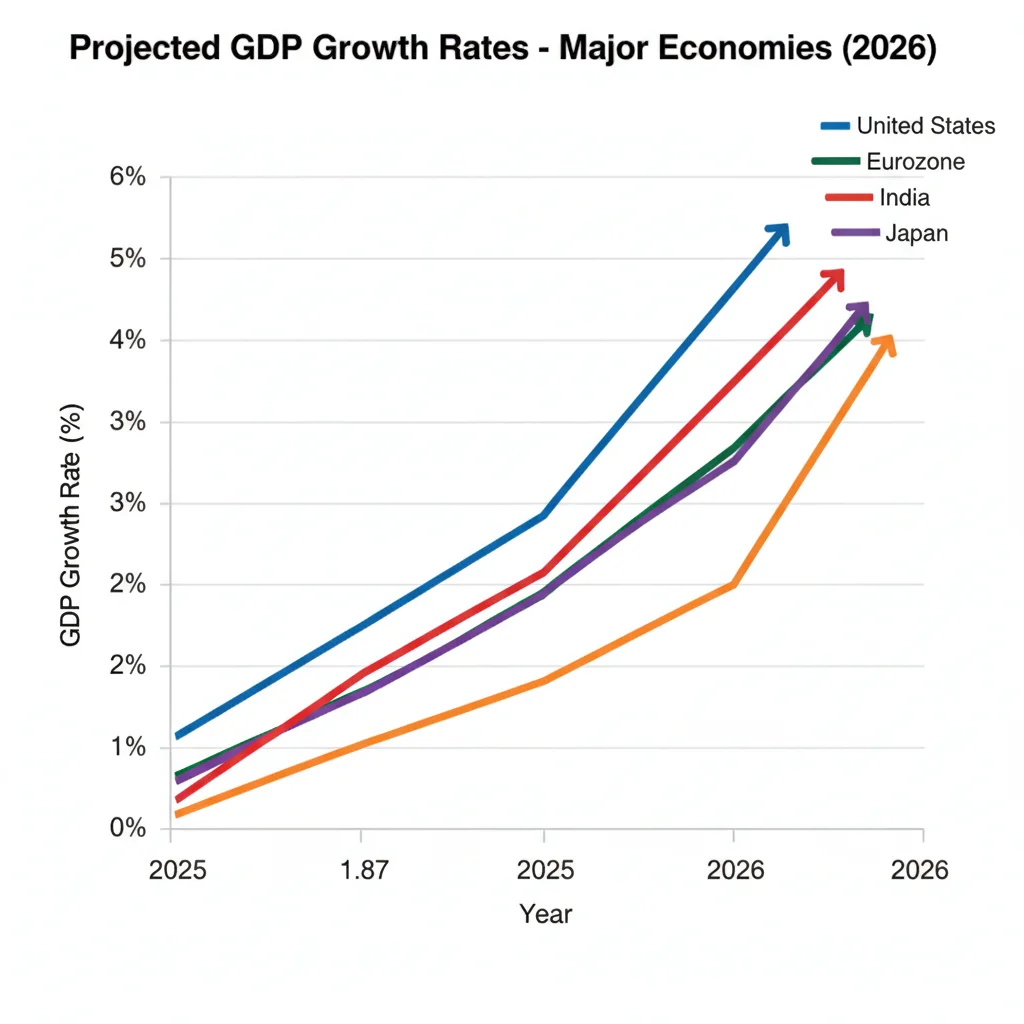
Gross Domestic Product (GDP) remains the most widely recognized and fundamental measure of a country’s economic activity. It represents the total monetary value of all finished goods and services produced within a country’s borders in a specific time period. For 2026, projected GDP growth rates will be a primary focus for assessing global economic health and identifying regions of opportunity or concern. A robust GDP growth rate typically signifies a healthy and expanding economy, leading to increased employment, higher incomes, and greater overall prosperity.
Global GDP Outlook for 2026
Forecasting GDP growth for 2026 involves analyzing a multitude of factors, including global trade dynamics, technological innovation, government fiscal policies, and consumer confidence. International organizations like the International Monetary Fund (IMF) and the World Bank regularly publish their projections, which serve as crucial benchmarks. While specific figures will evolve, the general consensus points towards a continued, albeit perhaps moderated, recovery in many advanced economies, with emerging markets potentially driving higher growth rates due to demographic advantages and industrialization efforts.
- Advanced Economies: Many advanced economies are expected to see steady, moderate GDP growth in 2026. This growth will likely be supported by ongoing digitalization, green energy transitions, and targeted infrastructure investments. However, aging populations and high public debt levels in some regions could act as headwinds.
- Emerging Markets: Countries in Asia, Latin America, and parts of Africa are anticipated to exhibit stronger GDP growth. Factors such as a rising middle class, increased foreign direct investment, and a younger workforce will contribute to their economic expansion. However, these economies may also face challenges related to political stability, commodity price volatility, and access to capital.
- Geopolitical Influences: The geopolitical landscape will play a significant role in shaping 2026 GDP projections. Trade agreements, international relations, and regional conflicts can either foster economic cooperation and growth or introduce significant uncertainty and disruption.
Factors Influencing 2026 GDP Growth
Several key factors will heavily influence the actual GDP growth observed in 2026. Understanding these drivers is essential for a nuanced interpretation of the economic indicators 2026 related to output.
- Technological Advancements: The rapid pace of innovation, particularly in artificial intelligence, biotechnology, and renewable energy, is expected to be a significant driver of productivity and economic growth. Investments in these sectors can lead to new industries, job creation, and enhanced efficiency across existing sectors.
- Monetary and Fiscal Policies: Central banks’ interest rate decisions and governments’ spending and taxation policies will continue to shape economic activity. The balancing act between controlling inflation and stimulating growth will be a defining characteristic of monetary policy in 2026. Fiscal policies aimed at infrastructure development, education, and healthcare can also provide long-term growth impulses.
- Consumer and Business Confidence: The willingness of consumers to spend and businesses to invest is a critical determinant of GDP growth. Factors such as job security, wage growth, and perceived economic stability directly influence confidence levels.
- Global Supply Chains: The resilience and efficiency of global supply chains will remain crucial. Disruptions, whether from natural disasters, geopolitical events, or trade protectionism, can significantly impact production and lead to inflationary pressures, thereby affecting GDP.
Monitoring these factors in conjunction with official GDP reports will provide a clearer picture of the economic health in 2026. The nuanced interplay of these elements will ultimately determine the pace and sustainability of global economic expansion.
The Cost of Living: Inflation Rates in 2026
Inflation, the rate at which the general level of prices for goods and services is rising, and consequently, the purchasing power of currency is falling, is another critical economic indicator 2026. After periods of elevated inflation in the preceding years, the trajectory of price stability in 2026 will be a key concern for households, businesses, and central banks alike. High and volatile inflation erodes savings, increases the cost of borrowing, and creates economic uncertainty, whereas stable and moderate inflation is often seen as a sign of a healthy, growing economy.
Inflationary Pressures and Projections for 2026
The inflation outlook for 2026 is complex, influenced by a combination of demand-side and supply-side factors. While many central banks have aggressively tightened monetary policy to combat inflation, the full effects of these actions, alongside evolving supply chain dynamics and energy prices, will manifest over time.
- Monetary Policy Effectiveness: The sustained impact of interest rate hikes implemented in previous years will be a major determinant of inflation in 2026. Central banks will likely remain vigilant, adjusting policies as needed to steer inflation towards their target rates, typically around 2-3%.
- Supply Chain Normalization: Continued normalization of global supply chains, following disruptions from the pandemic and geopolitical events, could alleviate some inflationary pressures. Improved logistics, increased production capacity, and reduced shipping costs would contribute to lower prices for goods.
- Energy Prices: Global energy markets, particularly oil and natural gas prices, will continue to be a significant wildcard. Geopolitical tensions, production decisions by major oil-producing nations, and the pace of the green energy transition will all influence energy costs, which permeate through almost all sectors of the economy.
- Wage Growth: The relationship between wage growth and inflation will be closely watched. If wage growth outpaces productivity gains, it could lead to a wage-price spiral, making it harder to bring inflation under control. Conversely, moderate wage growth that aligns with productivity can support sustainable economic expansion.
Strategies for Managing Inflation in 2026
Both individuals and institutions will need to adopt strategies to navigate the inflationary environment of 2026. For businesses, this might involve optimizing supply chains, hedging against commodity price fluctuations, and carefully managing pricing strategies. For individuals, understanding the impact of inflation on purchasing power is crucial for personal finance planning.
Governments and central banks will continue to play a pivotal role in managing inflation. Fiscal prudence, structural reforms to enhance productivity, and clear communication from monetary authorities can help anchor inflation expectations and prevent runaway price increases. The challenge will be to achieve price stability without stifling economic growth, a delicate balancing act that will define economic policy in 2026.
The Human Element: Employment Data in 2026
Employment data, including unemployment rates, labor force participation, and wage growth, provides crucial insights into the health of the labor market and, by extension, the broader economy. Strong employment figures typically indicate robust economic activity, consumer confidence, and a healthy demand for goods and services. Conversely, rising unemployment can signal an economic slowdown or recession. For 2026, the evolution of employment data will be a key economic indicator 2026 to watch, reflecting both the resilience of economies and the impact of structural changes.
Key Trends in the 2026 Labor Market
The labor market in 2026 is expected to be shaped by several ongoing trends, including technological disruption, demographic shifts, and evolving work preferences.
- Automation and AI: The increasing adoption of automation and artificial intelligence will continue to transform job roles. While some jobs may be displaced, new ones requiring different skill sets are likely to emerge. This necessitates ongoing investment in education and reskilling programs to ensure a smooth transition for the workforce.
- Demographic Shifts: Aging populations in many advanced economies will continue to exert pressure on labor supply, potentially leading to labor shortages in certain sectors. Conversely, younger populations in emerging markets could provide a demographic dividend, boosting their labor force.
- Remote and Hybrid Work: The shift towards remote and hybrid work models, accelerated by recent global events, is likely to become more entrenched. This can offer greater flexibility for employees and broader talent pools for employers, but also poses challenges related to productivity measurement, company culture, and urban planning.
- Skill Gaps: A persistent challenge will be the widening skill gap between the demands of the modern economy and the capabilities of the available workforce. Industries such as technology, healthcare, and green energy will require specialized skills, making continuous learning and vocational training more critical than ever.
Analyzing Unemployment and Wage Growth for 2026
When examining employment data for 2026, it’s essential to look beyond just the headline unemployment rate. Other metrics offer a more nuanced understanding:
- Unemployment Rate: This remains the most direct measure of joblessness. A low and stable unemployment rate is generally indicative of a strong economy. However, it’s important to consider factors like discouraged workers (those who have stopped looking for work) and underemployment (people working fewer hours than they desire or in jobs below their skill level).
- Labor Force Participation Rate: This metric indicates the proportion of the working-age population that is either employed or actively seeking employment. A rising participation rate, especially among demographics that have historically been underrepresented, can signal a healthier and more inclusive labor market.
- Wage Growth: Sustainable wage growth is crucial for improving living standards and supporting consumer spending. However, as discussed in the inflation section, excessively high wage growth without corresponding productivity gains can fuel inflationary pressures. Monitoring real wage growth (wage growth adjusted for inflation) provides a more accurate picture of purchasing power.
- Job Creation by Sector: Analyzing which sectors are creating jobs and which are shedding them can reveal underlying structural shifts in the economy. Growth in high-value-added sectors often signals innovation and future economic potential.
Understanding these facets of employment data will be vital for accurately interpreting the economic indicators 2026 related to the human capital of economies. Policies aimed at fostering job creation, improving labor market flexibility, and investing in human capital will be essential for sustained economic stability.

Interconnectedness of Economic Indicators 2026
It is crucial to recognize that GDP growth, inflation rates, and employment data are not isolated metrics; they are deeply interconnected, forming a complex web of economic cause and effect. Changes in one indicator inevitably influence the others, creating a dynamic system that requires careful monitoring and analysis. For instance, strong GDP growth often leads to increased demand for labor, which can drive down unemployment and push up wages. However, if wage growth outpaces productivity, it can contribute to inflationary pressures, potentially forcing central banks to raise interest rates, which in turn could temper GDP growth and employment.
The Philips Curve and Its Modern Relevance
The historical relationship between unemployment and inflation, often illustrated by the Philips Curve, suggests an inverse correlation: as unemployment falls, inflation tends to rise. While this relationship has been challenged and modified over time, especially in periods of ‘stagflation’ (high inflation and high unemployment), its underlying principle of trade-offs in economic policy remains relevant. For 2026, policymakers will be constantly evaluating this trade-off, aiming to achieve a ‘Goldilocks’ scenario of low unemployment and stable, moderate inflation.
The Role of Consumer and Business Confidence
Confidence acts as a critical bridge between these indicators. When consumers are confident about their job prospects and future income (linked to employment data), they are more likely to spend, contributing to GDP growth. Similarly, when businesses are confident about future demand and economic stability, they are more likely to invest, hire, and innovate, further fueling GDP and employment. However, if inflation erodes purchasing power, consumer confidence can wane, leading to reduced spending and a potential slowdown in economic activity.
Global Context and Spillover Effects
In an increasingly globalized world, the economic performance of one major country or region can have significant spillover effects on others. For example, a slowdown in a large economy could reduce demand for exports from its trading partners, impacting their GDP and employment. Similarly, commodity price shocks or supply chain disruptions originating in one part of the world can propagate globally, affecting inflation rates everywhere. Therefore, when analyzing economic indicators 2026, it is imperative to adopt a global perspective, understanding that domestic economic health is often intertwined with international developments.
Forecasting Challenges and Uncertainties for 2026
While economic forecasting provides valuable insights, it is inherently subject to uncertainties. The year 2026, like any future period, will present its own set of challenges that could alter the predicted trajectories of GDP, inflation, and employment.
Unforeseen Events (Black Swans)
History has repeatedly shown that unforeseen ‘black swan’ events – highly improbable, high-impact occurrences – can dramatically reshape economic landscapes. These could range from new pandemics or major natural disasters to significant geopolitical conflicts or unprecedented technological breakthroughs. While such events cannot be predicted, their potential impact underscores the need for resilience and adaptability in economic planning.
Policy Responses
The effectiveness and timeliness of policy responses from governments and central banks will be crucial. Suboptimal monetary or fiscal policy decisions, or delays in implementation, could exacerbate economic challenges or hinder recovery. Conversely, well-calibrated and coordinated policies can mitigate risks and foster stability.
Technological Disruption
The pace of technological change, particularly in areas like AI and automation, can be difficult to predict. While generally seen as a driver of long-term growth, rapid disruption could also lead to short-term job displacement or the need for significant structural adjustments in the labor market, impacting employment data.
Climate Change Impacts
The increasing frequency and intensity of climate-related events pose a growing economic risk. Extreme weather can disrupt supply chains, damage infrastructure, impact agricultural output, and displace populations, all of which can affect GDP, inflation, and employment. The transition to a green economy also presents both opportunities and challenges that will influence these indicators.
Conclusion: Navigating the Economic Landscape of 2026
The economic indicators 2026 – GDP growth, inflation rates, and employment data – will collectively paint a comprehensive picture of the global economic environment. By closely monitoring these three key metrics, stakeholders can gain valuable insights into the stability, growth potential, and challenges that lie ahead. While forecasts provide a roadmap, the dynamic nature of the global economy necessitates continuous vigilance, adaptability, and a willingness to adjust strategies in response to new information.
For investors, understanding these indicators will be crucial for portfolio allocation, risk management, and identifying sectors poised for growth. Businesses will rely on this data for strategic planning, resource allocation, and market positioning. Policymakers, in turn, will use these metrics to formulate effective monetary and fiscal policies aimed at fostering sustainable growth, maintaining price stability, and ensuring a healthy labor market. The interconnectedness of these indicators means that a holistic approach, considering how each influences the others, is essential for accurate assessment and effective decision-making.
As we move towards 2026, the global economy will undoubtedly present both opportunities and hurdles. The ability to interpret and respond to the signals from these vital economic indicators 2026 will be paramount for navigating the future with confidence and securing long-term prosperity. By staying informed and adopting a proactive stance, individuals and institutions can better prepare for the economic realities of the coming years.
Related Posts: