Diversify Beyond Stocks: Top 3 Alternative Investments 2026
Discover how to diversify your investment portfolio beyond conventional stocks and bonds. This guide explores three promising alternative investment avenues for 2026: real estate, private equity, and digital assets, offering insights into their potential and considerations for investors.
By: Lara Barbosa on May 20, 2026
Last updated on: July 31, 2026
Diversify Beyond Stocks: Top 3 Alternative Investments 2026
Diversification Beyond Stocks and Bonds: Exploring 3 Alternative Investment Avenues for 2026
In the ever-evolving landscape of finance, traditional investment strategies centered solely on stocks and bonds are increasingly being challenged. As market volatility persists and the search for higher returns intensifies, investors are looking beyond conventional assets to fortify their portfolios. The year 2026 promises to be a pivotal time for those seeking to explore alternative investment avenues, offering unique opportunities for diversification, risk mitigation, and potentially superior returns.
For decades, the 60/40 portfolio (60% stocks, 40% bonds) was considered the gold standard for balanced investing. However, with interest rates at historic lows and equity markets experiencing significant swings, many financial advisors and sophisticated investors are advocating for a more diversified approach. This shift is not merely a trend; it’s a strategic imperative driven by the need to adapt to new economic realities and technological advancements. Embracing alternative investment avenues allows investors to tap into markets that behave differently from traditional assets, potentially reducing overall portfolio risk and enhancing long-term growth.
This comprehensive guide will delve into three prominent alternative investment avenues poised for significant growth and investor interest in 2026: Real Estate, Private Equity, and Digital Assets. We will explore the nuances of each, highlight their benefits and risks, and provide actionable insights for integrating them into your investment strategy. Whether you are a seasoned investor or just beginning to explore diversification, understanding these avenues is crucial for building a resilient and prosperous financial future.
The Imperative for Diversification: Why Look Beyond Tradition?
The global financial environment is characterized by interconnectedness and rapid change. Economic cycles, geopolitical events, and technological disruptions can send ripples through traditional markets, impacting stock and bond performance. Relying solely on these conventional assets can expose investors to concentrated risks, especially during periods of high inflation or economic stagnation.
Diversification, at its core, is about spreading investments across various asset classes, industries, and geographies to reduce overall portfolio risk. When one asset class underperforms, another might perform well, helping to smooth out returns and protect against significant losses. While stocks and bonds offer a degree of diversification within themselves, their correlation can sometimes be high, especially during systemic market downturns. This is where alternative investment avenues come into play, offering genuinely uncorrelated or low-correlated assets that can act as a buffer against market volatility.
Benefits of Exploring Alternative Investment Avenues:
Enhanced Returns: Many alternative assets, particularly private equity and certain real estate ventures, have the potential to generate higher returns than traditional public markets, albeit often with higher risk and illiquidity.
Reduced Volatility: By adding assets with low correlation to stocks and bonds, investors can potentially reduce the overall volatility of their portfolio, leading to a smoother investment journey.
Inflation Hedge: Assets like real estate and commodities often perform well during inflationary periods, offering a natural hedge against the erosion of purchasing power.
Access to Unique Opportunities: Alternative investments provide access to private markets, emerging technologies, and specialized sectors that are unavailable through traditional stock exchanges.
Portfolio Resilience: A well-diversified portfolio with alternative assets is generally more resilient to market shocks and economic downturns.
Understanding these benefits underscores the growing importance of considering alternative investment avenues as a core component of a modern, forward-thinking investment strategy. As we move closer to 2026, the landscape for these assets is maturing, offering more structured and accessible ways for a broader range of investors to participate.
Alternative Investment Avenue 1: Real Estate
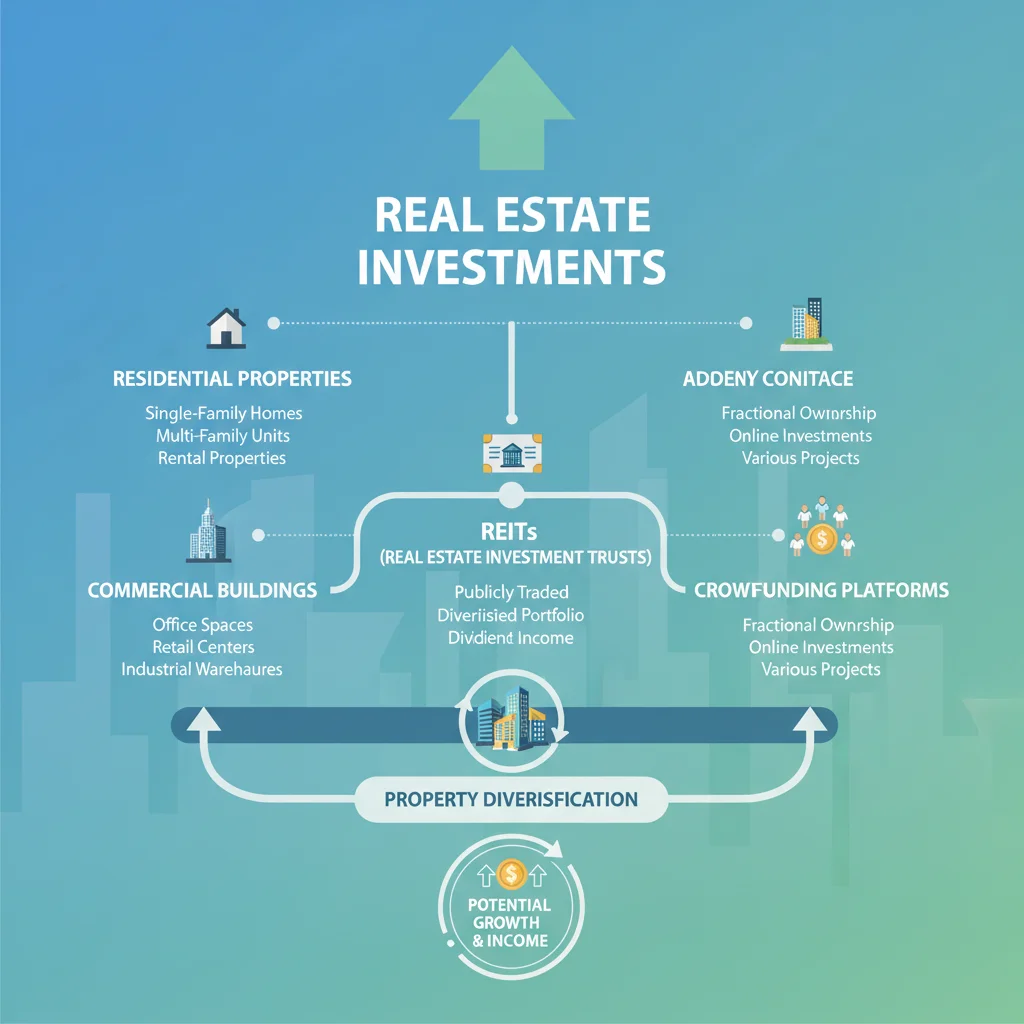
Real estate has long been a cornerstone of wealth creation, offering tangible assets with the potential for both income generation and capital appreciation. As an alternative investment avenue, it provides a powerful hedge against inflation and a degree of stability not always found in public markets. For 2026, the real estate sector continues to evolve, presenting diverse opportunities beyond direct property ownership.
Sub-Avenues within Real Estate:
1. Direct Property Ownership (Commercial & Residential)
Direct ownership of physical properties, whether residential (single-family homes, multi-family units) or commercial (office buildings, retail spaces, industrial warehouses), remains a popular strategy. Investors can generate rental income and benefit from property value appreciation over time. Key considerations include location, property management, and market cycles. In 2026, specific niches like logistics and data centers are expected to see continued strong demand, driven by e-commerce and digitalization.
2. Real Estate Investment Trusts (REITs)
REITs allow investors to own shares in companies that own, operate, or finance income-producing real estate. They trade on major stock exchanges, offering liquidity and diversification similar to stocks, but with the added benefit of real estate exposure. REITs typically specialize in different property types (e.g., healthcare, retail, residential). They are legally required to distribute at least 90% of their taxable income to shareholders annually, making them attractive for income-focused investors. For 2026, REITs focused on technology infrastructure (cell towers, data centers) and specialized industrial properties are particularly compelling.
3. Real Estate Crowdfunding
Real estate crowdfunding platforms democratize access to larger real estate projects that were once only available to institutional investors. These platforms allow multiple investors to pool their money to invest in various property types, from residential developments to commercial acquisitions. This approach offers lower entry barriers, diversification across multiple projects, and often passive income. However, it’s crucial to vet platforms thoroughly and understand the specific risks associated with each project. As technology advances, crowdfunding platforms are becoming more sophisticated, offering greater transparency and a wider array of vetted opportunities for 2026.
4. Private Real Estate Funds
These funds are managed by professional real estate firms that invest in a portfolio of properties or real estate-related assets. They are typically illiquid, requiring a long-term commitment, but can offer significant returns due to expert management and access to exclusive deals. Private funds often target specific strategies, such as value-add, opportunistic, or core real estate. High net worth individuals and institutional investors often use these as a key part of their alternative investment avenues.
Considerations for Real Estate Investments:
Market Cycles: Real estate markets are cyclical, influenced by economic growth, interest rates, and demographic shifts.
Liquidity: Direct property ownership and private funds can be highly illiquid, making it difficult to access capital quickly. REITs offer greater liquidity.
Management: Direct ownership requires significant time and effort for property management, or the cost of hiring a professional manager.
Capital Intensive: Direct real estate investment often requires substantial upfront capital.
Despite these considerations, real estate remains a robust alternative investment avenue for 2026, offering tangible value and consistent income streams, especially when integrated thoughtfully into a broader portfolio.
Alternative Investment Avenue 2: Private Equity
Private equity (PE) involves investing in companies that are not publicly traded on a stock exchange. This alternative investment avenue typically involves acquiring equity stakes in private companies, often with the goal of improving their operations and eventually selling them for a profit or taking them public. PE firms usually raise capital from institutional investors and high-net-worth individuals, forming funds that then invest in a portfolio of companies. For 2026, private equity continues to be a powerful driver of economic growth and a source of attractive returns for sophisticated investors.
Sub-Avenues within Private Equity:
1. Venture Capital (VC)
Venture Capital is a subset of private equity that focuses on providing seed, early-stage, and emerging company financing. VC firms invest in startups and small businesses with high growth potential, often in technology, biotechnology, and other innovative sectors. While highly risky, successful VC investments can yield exponential returns. Access is typically through VC funds, requiring significant capital and a long-term outlook. The rapid pace of technological innovation ensures that VC will remain a dynamic alternative investment avenue in 2026.
2. Growth Equity
Growth equity sits between venture capital and traditional buyout strategies. It involves investing in more mature, established companies that are past the startup phase but still require capital to expand, enter new markets, or finance significant initiatives without taking on excessive debt. These companies typically have proven business models and revenue streams, making growth equity less risky than venture capital but still offering substantial upside potential.
3. Leveraged Buyouts (LBOs)
LBOs are a common private equity strategy where a PE firm acquires a controlling stake in a company, primarily using borrowed money (leverage). The acquired company’s assets often serve as collateral for the loans. The goal is to improve the company’s efficiency and profitability, reduce its debt, and eventually sell it for a significant profit. LBOs are complex and carry substantial risk due to the high debt levels involved, but they can generate impressive returns when executed effectively.
4. Private Debt
Private debt involves lending capital to private companies, often in situations where traditional banks are unwilling or unable to lend. This can include direct lending, mezzanine financing, and distressed debt. Private debt offers investors a steady income stream from interest payments and can be less correlated with public markets. It provides an attractive risk-adjusted return profile, especially in a rising interest rate environment, making it a growing component of alternative investment avenues for 2026.
Considerations for Private Equity Investments:
Illiquidity: Private equity investments are highly illiquid, often requiring capital to be locked up for many years (typically 5-10 years or more).
High Minimums: Access to private equity funds often requires significant minimum investments, making it more accessible to institutional and ultra-high-net-worth investors.
Complexity and Due Diligence: Evaluating private companies and funds requires deep financial expertise and extensive due diligence.
Manager Dependence: Returns are heavily dependent on the skill and experience of the private equity fund manager.
Despite these barriers, private equity offers exposure to innovative businesses and the potential for substantial long-term capital appreciation, making it a compelling option among alternative investment avenues for those with the appropriate risk tolerance and investment horizon.
Alternative Investment Avenue 3: Digital Assets
Digital assets, primarily cryptocurrencies and non-fungible tokens (NFTs), represent a revolutionary class of assets built on blockchain technology. While still relatively nascent compared to traditional asset classes, their rapid growth and increasing institutional adoption make them an undeniable alternative investment avenue for 2026. They offer unique characteristics such as decentralization, transparency, and global accessibility, but also come with significant volatility and regulatory uncertainty.
Sub-Avenues within Digital Assets:
1. Cryptocurrencies (Bitcoin, Ethereum, Altcoins)
Bitcoin (BTC) and Ethereum (ETH) are the two largest and most established cryptocurrencies. Bitcoin is often seen as ‘digital gold’ due to its scarcity and store-of-value properties, while Ethereum powers a vast ecosystem of decentralized applications (dApps), smart contracts, and NFTs. Beyond these two, thousands of ‘altcoins’ (alternative cryptocurrencies) exist, each with different use cases, technologies, and market capitalizations. Investing in cryptocurrencies can be done through direct purchases on exchanges, through crypto-ETFs (where available and regulated), or via specialized funds. The potential for disruption across various industries makes cryptocurrencies a high-growth alternative investment avenue.
2. Non-Fungible Tokens (NFTs)
NFTs are unique digital assets stored on a blockchain, representing ownership of a specific item or piece of content, such as art, music, collectibles, or even virtual real estate. Unlike cryptocurrencies, which are fungible (interchangeable), each NFT is one-of-a-kind. The NFT market exploded in recent years, driven by digital artists, gaming, and the metaverse. While highly speculative and subject to significant price swings, NFTs offer exposure to the burgeoning digital economy and the concept of digital scarcity. As the metaverse evolves, NFTs will play an increasingly integral role, cementing their status as a unique alternative investment avenue.
3. Decentralized Finance (DeFi)
DeFi refers to a financial ecosystem built on blockchain technology, primarily Ethereum, that aims to replicate traditional financial services (lending, borrowing, trading, insurance) without intermediaries like banks. Investors can participate in DeFi protocols by providing liquidity, staking cryptocurrencies, or lending assets to earn interest or rewards. While offering attractive yields, DeFi carries risks related to smart contract vulnerabilities, regulatory uncertainty, and market volatility. However, its potential to revolutionize finance makes it a fascinating and high-potential alternative investment avenue for those willing to navigate its complexities.
4. Blockchain Infrastructure & Web3 Projects
Beyond direct crypto or NFT ownership, investors can also gain exposure by investing in the underlying blockchain infrastructure and Web3 projects. This could involve investing in companies developing blockchain technology, mining operations, or platforms that facilitate the creation and exchange of digital assets. These investments offer a more indirect way to participate in the growth of the digital asset space, potentially with less direct exposure to the extreme volatility of individual tokens.
Considerations for Digital Asset Investments:
Extreme Volatility: Digital assets are notoriously volatile, with prices capable of experiencing drastic swings in short periods.
Regulatory Uncertainty: The regulatory landscape for digital assets is still evolving, posing risks related to future government policies and restrictions.
Security Risks: Digital assets are vulnerable to hacking, scams, and loss if not properly secured (e.g., through hardware wallets).
Technological Complexity: Understanding the underlying technology and assessing the value of different digital assets requires significant research and technical knowledge.
Market Manipulation: The relatively smaller market capitalization of many digital assets makes them more susceptible to market manipulation.
Despite the high risks, the transformative potential of digital assets cannot be overstated. For investors with a high-risk tolerance and a long-term perspective, integrating digital assets as part of their alternative investment avenues can offer unparalleled growth opportunities in 2026 and beyond.
Integrating Alternative Investments into Your Portfolio for 2026
Successfully incorporating alternative investment avenues into your portfolio requires careful planning, a clear understanding of your financial goals, and a realistic assessment of your risk tolerance. It’s not about abandoning traditional assets but rather enhancing your diversification strategy.
Key Steps for Integration:
Define Your Objectives: What are you hoping to achieve with alternative investments? Is it higher returns, lower volatility, inflation hedging, or access to unique growth opportunities?
Assess Your Risk Tolerance: Alternative assets often come with higher risks, including illiquidity and complexity. Ensure your risk appetite aligns with the characteristics of these investments.
Allocate Appropriately: A common mistake is over-allocating to alternatives. A modest allocation (e.g., 5-20% of your total portfolio) is often recommended, especially for individual investors. The exact percentage will depend on your specific circumstances and financial advisor’s guidance.
Due Diligence is Paramount: Thoroughly research any alternative investment opportunity or fund manager. Understand the fees, historical performance, underlying assets, and exit strategies. For digital assets, delve into the technology, use case, and community support.
Long-Term Perspective: Many alternative investments, particularly private equity and direct real estate, require a long-term commitment. Be prepared for illiquidity and potential lock-up periods.
Consider Professional Guidance: Given the complexity of many alternative investment avenues, consulting with a financial advisor specializing in alternative assets can be invaluable. They can help you navigate the options, assess risks, and integrate these assets effectively into your overall financial plan.
Stay Informed: The alternative investment landscape is dynamic. Continuously educate yourself about market trends, regulatory changes, and new opportunities within real estate, private equity, and digital assets.
The Future of Investment: Embracing the New Paradigm
As we look towards 2026, the investment world is clearly moving towards a more diversified and sophisticated approach. The days of simply buying and holding a handful of stocks and bonds are giving way to a more dynamic strategy that incorporates a broader spectrum of assets. Alternative investment avenues like real estate, private equity, and digital assets are no longer niche plays for institutional investors; they are becoming increasingly accessible and essential components of a robust investment portfolio.
The global economy is constantly evolving, driven by technological innovation, demographic shifts, and changing consumer behaviors. These factors create both challenges and opportunities for investors. By strategically allocating capital to alternative investment avenues, you can position your portfolio to capitalize on these trends, mitigate risks associated with traditional markets, and potentially achieve superior long-term returns.
While the allure of high returns is strong, it is crucial to approach these investments with a clear understanding of the associated risks and complexities. Education, due diligence, and a disciplined investment approach are the cornerstones of success in this exciting new era of finance. Whether you choose to invest in tangible properties, high-growth private companies, or the cutting-edge world of blockchain, the principle remains the same: thoughtful diversification is key to building lasting wealth.
Conclusion: Your Path to a Resilient Portfolio in 2026
The journey to financial prosperity in 2026 and beyond will undoubtedly involve navigating a complex and ever-changing investment landscape. Relying solely on traditional stocks and bonds may no longer be sufficient to meet your financial objectives or adequately protect your wealth against market uncertainties. By actively exploring and strategically integrating alternative investment avenues such as real estate, private equity, and digital assets, you can build a more diversified, resilient, and potentially higher-performing portfolio.
Each of these avenues offers distinct advantages and unique risk profiles. Real estate provides tangible assets, income generation, and an inflation hedge. Private equity offers access to high-growth private companies and potentially significant capital appreciation. Digital assets present revolutionary opportunities in a decentralized, digital economy. By understanding the intricacies of each and aligning them with your personal financial goals and risk tolerance, you can unlock new dimensions of investment growth.
Remember, successful investing is not just about chasing the highest returns; it’s about building a balanced portfolio that can withstand various market conditions and align with your long-term vision. Embrace the opportunities presented by these alternative investment avenues, conduct thorough research, and consider professional advice to confidently chart your course toward a prosperous financial future in 2026 and beyond.
Lara Barbosa has a degree in Journalism, with experience in editing and managing news portals. Her approach combines academic research and accessible language, turning complex topics into educational materials of interest to the general public.