Dive into the world of ESG investment funds with our detailed 2026 guide. Analyze their 5-year performance, understand key drivers, and discover what the future holds for sustainable investing.
By: Lara Barbosa on June 30, 2026
Last updated on: July 31, 2026
In an era defined by increasing global awareness and a collective push towards sustainability, Environmental, Social, and Governance (ESG) investment funds have transitioned from a niche concept to a mainstream financial powerhouse. As we stand in 2026, the trajectory of these funds over the past five years offers a compelling narrative of both resilience and significant growth. Investors, both institutional and individual, are no longer solely focused on financial returns; they are actively seeking to align their portfolios with their values, driving unprecedented demand for ESG funds performance. This comprehensive guide delves into the 5-year performance of ESG investment funds, exploring the factors that have shaped their trajectory, the challenges they’ve overcome, and what the future holds for this transformative segment of the financial market.
The concept of ESG investing has evolved dramatically. What once might have been dismissed as ‘ethical investing’ with potentially lower returns is now recognized as a sophisticated approach that integrates material non-financial factors into investment decisions. The belief is that companies with strong ESG practices are better managed, more resilient to future shocks, and ultimately, better positioned for long-term success. This belief has been increasingly validated by market performance, making the analysis of ESG funds performance over the last half-decade particularly pertinent for any forward-thinking investor.
The Rise of ESG: A Five-Year Retrospective (2021-2026)
The period between 2021 and 2026 has been pivotal for ESG investment funds. Following a surge in interest during the late 2010s, these funds faced a true test of their mettle amidst global economic uncertainties, geopolitical shifts, and a lingering pandemic. Yet, rather than faltering, many ESG funds demonstrated remarkable resilience, often outperforming their traditional counterparts. This period saw a significant maturation of the ESG market, with improved data availability, more refined rating methodologies, and a clearer understanding among investors of what ESG truly entails.
Initially, concerns about ‘greenwashing’ – where companies or funds exaggerate their sustainability credentials – posed a challenge. However, regulatory bodies and industry associations have made considerable strides in establishing clearer standards and reporting requirements. This has led to greater transparency and accountability, bolstering investor confidence in the authenticity of ESG claims. The global push for net-zero emissions, coupled with increasing social equity demands, further amplified the relevance and urgency of ESG considerations across all sectors. This sustained momentum has directly influenced the robust ESG funds performance we observe today.
Several key drivers underpinned this growth:
Increased Investor Awareness: A growing body of research has highlighted the correlation between strong ESG practices and financial outperformance, dispelling the myth of a ‘return sacrifice’ for sustainable investing.
Regulatory Support: Governments and financial regulators worldwide have introduced policies and frameworks encouraging sustainable finance, from disclosure requirements to incentives for green investments.
Demographic Shifts: Younger generations, particularly millennials and Gen Z, are more likely to prioritize social and environmental impact in their investment decisions, channeling significant capital into ESG-aligned products.
Corporate Adoption: Companies are increasingly integrating ESG principles into their core business strategies, recognizing the long-term benefits of sustainability for brand reputation, risk management, and operational efficiency.
These factors collectively created a fertile ground for ESG funds to flourish, making their 5-year performance a subject of intense scrutiny and admiration. The narrative has shifted from ‘why invest in ESG?’ to ‘how can I integrate ESG effectively into my portfolio?’ This fundamental change in perspective is a testament to the enduring power and potential of sustainable finance, directly impacting ESG funds performance across various sectors.
Understanding ESG: Environmental, Social, and Governance Pillars
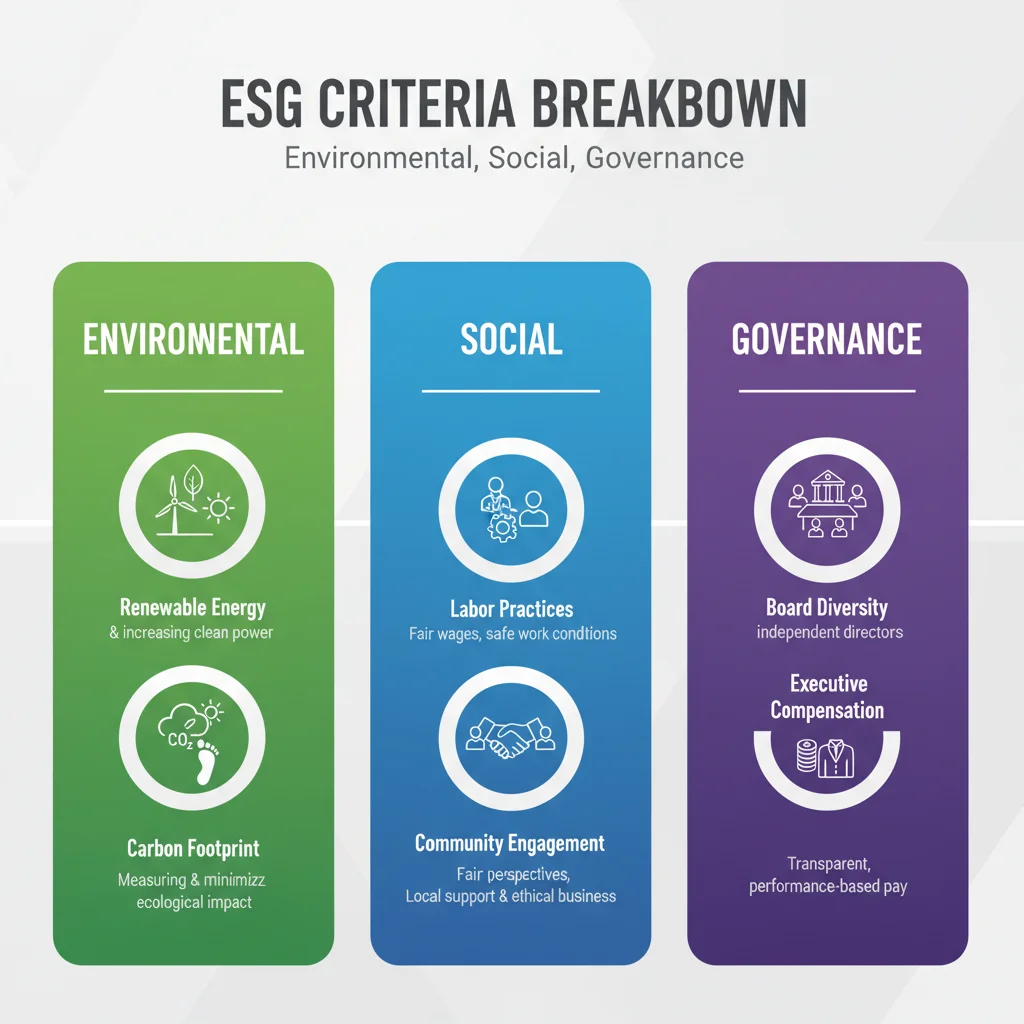
To fully appreciate the ESG funds performance, it’s crucial to understand the three core pillars that define ESG investing:
Environmental (E)
This pillar focuses on a company’s impact on the natural world. Key considerations include:
Climate Change: Carbon emissions, renewable energy use, energy efficiency.
Pollution: Air and water pollution, waste management, toxic chemicals.
Natural Resources: Water scarcity, deforestation, biodiversity.
Circular Economy: Efforts towards reducing, reusing, and recycling resources.
Funds that prioritize the ‘E’ in ESG often invest in companies actively developing solutions for climate change, promoting sustainable resource management, or reducing their environmental footprint significantly. Their ability to innovate and adapt to a greener economy directly influences their long-term viability and, consequently, the ESG funds performance they contribute to.
Social (S)
The social pillar examines how a company manages its relationships with employees, suppliers, customers, and the communities where it operates. Important aspects include:
Labor Practices: Fair wages, working conditions, employee health and safety, diversity and inclusion.
Human Rights: Supply chain labor standards, avoidance of child labor or forced labor.
Community Engagement: Local impact, philanthropic efforts, product safety and quality.
Customer Satisfaction: Data privacy, ethical marketing practices.
Companies with strong social credentials are often seen as more stable and less prone to reputational risks, which can translate into more consistent financial performance. Investors seeking robust ESG funds performance often look for portfolios that include companies demonstrating exemplary social responsibility.
Governance (G)
Governance refers to a company’s leadership, executive pay, audits, internal controls, and shareholder rights. It’s about how a company is run. Key elements include:
Board Diversity: Independence, expertise, and representation on the board of directors.
Executive Compensation: Alignment of pay with performance and long-term value creation.
Shareholder Rights: Transparency, voting rights, and protection of minority shareholders.
Business Ethics: Anti-corruption policies, ethical conduct, and internal controls.
Good governance is often considered the bedrock of a well-run company, ensuring accountability, transparency, and effective decision-making. Companies with strong governance structures are typically better equipped to navigate challenges and seize opportunities, positively impacting their stock performance and, by extension, the ESG funds performance they are part of.
Analyzing ESG Funds Performance: Key Metrics and Trends (2021-2026)
The 5-year period leading up to 2026 has provided a wealth of data for analyzing ESG funds performance. While specific returns vary widely depending on the fund’s strategy, sector focus, and geographic allocation, several overarching trends have emerged:
Outperformance in Volatile Markets: A significant trend has been the ability of many ESG funds to demonstrate greater resilience during periods of market downturns or heightened volatility. This is often attributed to the lower risk profile of companies with strong ESG practices, as they tend to be more adaptable and less exposed to regulatory or reputational risks.
Strong Growth in Green and Renewable Energy Sectors: Funds heavily invested in renewable energy, clean technology, and sustainable infrastructure have seen exceptional growth, driven by global climate initiatives and technological advancements. This sector has been a significant contributor to overall ESG funds performance.
Increased Diversification: The ESG universe has expanded beyond traditional ‘green’ sectors. Funds now actively integrate ESG considerations across a broader range of industries, including technology, healthcare, and consumer staples, leading to more diversified portfolios and a broader representation of ESG funds performance.
Impact of ESG Ratings: The growing sophistication of ESG rating agencies has allowed investors to better differentiate between companies with genuine sustainability efforts and those merely paying lip service. Funds tracking high-rated ESG companies have generally shown better risk-adjusted returns.
Geographic Variations: While ESG investing has gained traction globally, performance can vary by region. European markets, with their stringent regulatory frameworks and strong public support for sustainability, have often led the way in ESG adoption and, consequently, in showcasing robust ESG funds performance.
Data from various financial analytics firms consistently show that a significant percentage of ESG funds have met or exceeded the performance of their conventional benchmarks over the 5-year period. This is a powerful rebuttal to early skepticism and a strong indicator that integrating ESG factors can enhance, rather than detract from, financial returns. The key lies in diligent research and understanding the specific ESG criteria and investment philosophy of each fund to accurately gauge its potential ESG funds performance.
Challenges and Criticisms in ESG Investing
Despite the positive momentum, the ESG investing landscape is not without its challenges and criticisms. Addressing these is crucial for the continued maturation and integrity of the market and for understanding the nuances of ESG funds performance.
Data Inconsistencies: While ESG data has improved, inconsistencies in reporting standards and methodologies across different companies and rating agencies can make direct comparisons challenging for investors seeking to analyze ESG funds performance.
Greenwashing Concerns: The risk of ‘greenwashing’ remains a persistent concern. Some companies or funds may market themselves as ESG-friendly without genuinely integrating sustainable practices, potentially misleading investors and impacting the credibility of the entire sector.
Lack of Standardization: A universal standard for ESG metrics and reporting is still under development. This lack of standardization can create confusion and hinder accurate assessment of ESG impact and financial returns.
Subjectivity of ESG Criteria: What constitutes ‘good’ ESG can be subjective. For example, a company might excel in environmental practices but lag in social or governance aspects. Balancing these often complex and sometimes conflicting criteria requires careful consideration, influencing perceived ESG funds performance.
Performance Volatility: While many ESG funds have shown strong long-term performance, they are not immune to market volatility. Specific sectors within ESG, such as renewable energy, can be subject to policy changes or technological disruptions, leading to fluctuations in their ESG funds performance.
Addressing these challenges requires ongoing collaboration between regulators, industry participants, and investors. Improved data infrastructure, standardized reporting, and enhanced transparency are vital for strengthening the credibility of ESG investing and ensuring that the positive ESG funds performance observed is sustainable and verifiable.
The Future Outlook for ESG Investment Funds Beyond 2026
Looking beyond 2026, the trajectory for ESG investment funds appears to be one of continued growth and increasing sophistication. Several trends are expected to shape the future of ESG funds performance:
Deep Integration of AI and Big Data: Artificial intelligence and big data analytics will play an increasingly crucial role in processing vast amounts of ESG data, identifying emerging risks and opportunities, and providing more granular insights into company performance and impact. This will lead to more precise ESG ratings and potentially enhance AI’s Economic Impact 2026.
Focus on Impact Investing: Beyond simply avoiding harm, there will be a greater emphasis on ‘impact investing’ – actively seeking investments that generate measurable positive social and environmental impact alongside financial returns. This will drive innovation in fund design and reporting.
Enhanced Regulatory Landscape: Expect further global harmonization of ESG reporting standards and regulations. This will bring greater clarity, reduce greenwashing, and foster a more level playing field for companies and investors, positively influencing long-term ESG funds performance.
Thematic ESG Funds: The proliferation of highly specialized thematic ESG funds focusing on specific areas like water scarcity, sustainable agriculture, or circular economy initiatives will continue. These funds offer investors targeted exposure to specific sustainability challenges and opportunities.
Personalized ESG Portfolios: As technology advances, investors may have more options for creating highly personalized ESG portfolios that align with their unique values and impact preferences, moving beyond broad ESG categories.
Integration into Traditional Finance: ESG considerations will become even more deeply embedded within traditional financial analysis and decision-making across all asset classes, from public equities to private equity and fixed income. This mainstreaming will further solidify the market for ESG funds performance.
The investment landscape is undergoing a fundamental shift, where sustainability is no longer an optional add-on but a core component of long-term value creation. Companies that proactively address ESG factors are likely to be more resilient, innovative, and attractive to investors. This paradigm shift will continue to drive strong ESG funds performance, making them an indispensable part of a diversified and future-proof investment portfolio.
How to Evaluate ESG Funds for Your Portfolio
For investors looking to capitalize on the robust ESG funds performance, a methodical approach to evaluation is essential. Here’s a practical guide:
1. Define Your ESG Priorities
Before diving into specific funds, clarify what aspects of ESG are most important to you. Are you primarily concerned with climate change, social equity, or corporate governance? Your priorities will help you narrow down the vast universe of ESG funds and identify those that align with your values and potential for ESG funds performance.
2. Understand the Fund’s ESG Strategy
Not all ESG funds are created equal. Some use negative screening (excluding industries like tobacco or fossil fuels), others use positive screening (investing in best-in-class ESG performers), and some employ impact investing strategies. Understand the fund’s specific approach to ESG integration and how it aims to achieve its sustainability goals alongside its financial objectives, which directly impacts its expected ESG funds performance.
3. Analyze Historical Performance (Financial and ESG)
While past performance is not indicative of future results, a 5-year look back (2021-2026) at a fund’s financial returns compared to its benchmark and peers is crucial. Equally important is to examine its ESG performance track record. Has it consistently invested in highly-rated ESG companies? Has it engaged in shareholder activism to promote better ESG practices? This dual analysis provides a more holistic view of ESG funds performance.
4. Scrutinize ESG Ratings and Data Sources
Look at how the fund utilizes ESG ratings from reputable providers (e.g., MSCI, Sustainalytics, S&P Global ESG). Understand the methodologies behind these ratings and how they influence the fund’s investment decisions. Transparency in reporting ESG data is a hallmark of a credible ESG fund.
5. Review Fund Holdings and Sector Exposure
Examine the fund’s underlying holdings. Do they align with your understanding of ESG? Are there any ‘controversial’ companies that might contradict your values? Also, consider the sector and geographic exposure to ensure it fits your overall diversification strategy and risk tolerance, as this can affect ESG funds performance.
6. Consider Fees and Expenses
Like any investment, fees and expense ratios can eat into your returns. Compare the costs of ESG funds with similar traditional funds to ensure you are getting good value for your investment. Higher fees can diminish even strong ESG funds performance.
7. Read the Prospectus and Fund Reports
The fund’s prospectus and annual reports contain vital information about its objectives, risks, and investment policies. Pay particular attention to sections detailing its ESG integration process and reporting on its sustainability impact.
8. Consult with a Financial Advisor
For complex decisions, especially regarding portfolio allocation and risk management, consulting with a financial advisor specializing in sustainable investing can provide invaluable guidance. They can help you navigate the intricacies of ESG funds performance and integrate them effectively into your broader financial plan.
By following these steps, investors can make informed decisions, identify truly impactful and financially sound ESG funds, and contribute to a more sustainable future while potentially benefiting from compelling ESG funds performance.
Conclusion: ESG Investing as a Cornerstone of Future Portfolios
The journey of ESG investment funds from 2021 to 2026 has been nothing short of transformative. What began as an ethical consideration has firmly established itself as a critical component of sound financial strategy. The compelling 5-year ESG funds performance, characterized by resilience, competitive returns, and a growing alignment with global sustainability goals, underscores their increasing importance in the investment landscape.
While challenges such as data standardization and greenwashing persist, the industry is actively working towards greater transparency and accountability. The future of ESG investing is bright, propelled by technological advancements, evolving regulatory frameworks, and a demographic shift towards more conscious consumption and investment. As we move further into the 2020s, ESG funds are poised to become an even more central element of diversified portfolios, offering investors the dual benefit of financial growth and positive impact.
For those seeking to build a portfolio that reflects both financial acumen and a commitment to a better world, understanding and integrating ESG investment funds is no longer an option but a necessity. The evidence of their strong ESG funds performance over the past five years provides a solid foundation for confidence in their continued relevance and success in the years to come. Embrace the future of finance; embrace ESG.
Lara Barbosa has a degree in Journalism, with experience in editing and managing news portals. Her approach combines academic research and accessible language, turning complex topics into educational materials of interest to the general public.