Global Economic Headwinds: Impact on US Stability & 2026 GDP Outlook
The global economic landscape is a dynamic and interconnected web, where events in one corner of the world can send ripples, or even tidal waves, across continents. As we look towards 2026, a confluence of factors suggests that the United States economy will face significant global economic headwinds, potentially leading to a notable adjustment in its Gross Domestic Product (GDP). This comprehensive analysis will explore the multifaceted nature of these challenges, their likely impact on US economic stability, and the potential for a 2% GDP adjustment, offering insights into how businesses, policymakers, and individuals can prepare for the road ahead.
Understanding the Nature of Global Economic Headwinds
To fully grasp the impending challenges, it’s crucial to define what constitutes global economic headwinds. These are adverse conditions or forces that impede economic growth and stability on an international scale. They can manifest in various forms, including:
- Geopolitical Tensions: Conflicts, trade wars, and diplomatic disputes can disrupt supply chains, increase commodity prices, and create uncertainty for international investment.
- Inflationary Pressures: Persistent high inflation across major economies can erode purchasing power, necessitate aggressive monetary policy tightening, and slow down economic activity.
- Supply Chain Disruptions: Fragile global supply chains, still recovering from recent shocks, remain vulnerable to new disturbances, impacting production and consumer prices.
- Monetary Policy Divergence: Different approaches to interest rates and quantitative easing by central banks worldwide can lead to currency volatility and capital flow imbalances.
- Commodity Price Volatility: Fluctuations in the prices of oil, gas, metals, and agricultural products can significantly impact production costs and consumer spending.
- Climate Change Impacts: Increasing frequency and intensity of extreme weather events can disrupt agriculture, infrastructure, and lead to significant economic losses.
- Debt Burdens: High levels of public and private debt in numerous countries could trigger financial instability and limit fiscal policy options.
- Demographic Shifts: Aging populations and declining birth rates in major economies can lead to labor shortages and increased pressure on social welfare systems.
These factors often interact in complex ways, creating a domino effect that amplifies their collective impact. The interconnectedness of the modern global economy means that no nation, not even an economic powerhouse like the United States, is entirely immune to these external pressures.
The Current Global Economic Landscape: A Precursor to 2026
Before delving into the specifics of 2026, it’s important to acknowledge the prevailing conditions that are setting the stage for future challenges. The post-pandemic recovery has been uneven, marked by persistent inflation, aggressive interest rate hikes by central banks globally, and ongoing geopolitical instability, particularly in Eastern Europe and parts of Asia. Energy markets remain volatile, and food security concerns are rising in many regions.
China, a key player in the global economy, is grappling with its own set of challenges, including a property sector downturn, demographic shifts, and evolving trade relations. Europe faces the dual challenge of high energy costs and the ongoing conflict in Ukraine, which has strained its economic resilience. Emerging markets, while showing some signs of recovery, remain susceptible to capital outflows and currency depreciation as developed nations tighten monetary policy.
These existing vulnerabilities create a fertile ground for global economic headwinds to intensify by 2026. The cumulative effect of these pressures could exert significant drag on the US economy, which, despite its relative strength, is deeply integrated into the global trading and financial system.
How International Market Volatility Will Affect U.S. Economic Stability
International market volatility is a direct consequence of the aforementioned headwinds and will be a primary transmission mechanism for their impact on the US. This volatility can manifest in several ways:
1. Trade Disruptions and Export Demand
A global slowdown means reduced demand for US exports. If key trading partners experience economic contraction or significantly reduced growth, their appetite for American goods and services will diminish. This directly impacts sectors such as manufacturing, agriculture, and technology, leading to lower revenues, potential job losses, and a drag on overall economic expansion. Furthermore, any escalation in trade protectionism, driven by nationalistic sentiments or economic anxieties abroad, could further restrict market access for US companies. The intricate web of global supply chains means that disruptions overseas can also affect the availability and cost of imported components essential for US industries, creating bottlenecks and increasing production costs.
2. Financial Market Contagion
The interconnectedness of global financial markets means that instability in one region can quickly spread. A significant downturn in European or Asian markets, for instance, could trigger a sell-off in US equities, increase borrowing costs for US businesses, and lead to a flight to safety that strengthens the dollar, making US exports more expensive. Currency fluctuations, particularly a strong dollar, can also erode the profitability of US multinational corporations that repatriate earnings from overseas operations. The risk of sovereign debt crises in vulnerable nations could also spark broader financial panic, impacting investor confidence globally.
3. Commodity Price Shocks
The US economy, while a major energy producer, is still exposed to global commodity price volatility. Disruptions in oil production or transit routes due to geopolitical events, for example, can lead to higher gasoline prices, impacting consumer spending and inflation. Similarly, fluctuations in the prices of key industrial metals or agricultural commodities can affect various sectors of the US economy, from manufacturing to food production. These shocks act as a tax on consumers and businesses, reducing disposable income and profit margins.
4. Investment Flows and Capital Flight
Increased global uncertainty can deter foreign direct investment (FDI) into the US, which is a crucial source of capital for job creation and economic expansion. Conversely, if other markets are perceived as more stable or offer higher returns, capital could flow out of the US, potentially weakening the dollar or increasing domestic borrowing costs. Investor sentiment, often a fickle beast, can shift rapidly in response to global events, leading to unpredictable capital movements.
5. Inflationary Pressures from Abroad
Even if domestic inflation is brought under control, imported inflation remains a significant threat. Higher prices for goods and raw materials from overseas, driven by global demand, supply chain issues, or currency depreciation in exporting nations, can feed into US consumer prices. This makes the Federal Reserve’s job of managing inflation even more challenging, potentially necessitating further monetary tightening that could dampen economic growth.
The Projected 2% GDP Adjustment in 2026: A Deeper Dive
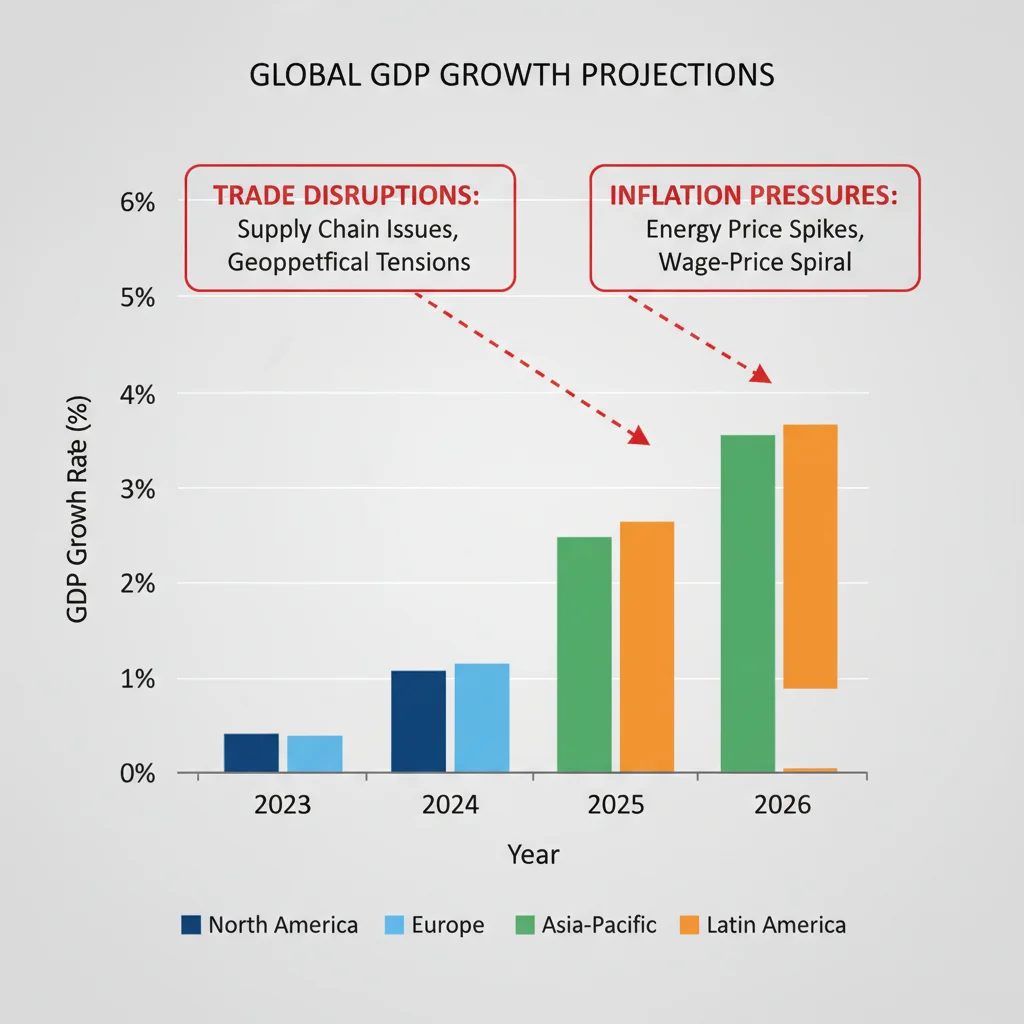
The forecast of a potential 2% GDP adjustment in 2026 is not an arbitrary figure but a calculated estimate based on the cumulative impact of these global economic headwinds. It represents a significant deceleration from recent growth trends and could even signify a mild recession or a period of protracted stagnation, depending on the baseline growth rate. This adjustment could stem from several interconnected factors:
Reduced Consumer Spending and Business Investment
As global instability and inflationary pressures persist, consumer confidence within the US is likely to be eroded. Households, facing higher costs for essentials and uncertainty about job security, tend to reduce discretionary spending. This slowdown in consumer demand, which accounts for a significant portion of US GDP, directly translates into lower economic growth. Simultaneously, businesses facing reduced demand, higher input costs, and an uncertain future are likely to scale back investment in new projects, expansion, and hiring. This reduction in capital expenditure further dampens economic activity and productivity growth.
Impact on Corporate Earnings and Stock Market Performance
Many US corporations derive a substantial portion of their revenue from international operations. As global economies slow down, these companies will experience reduced sales and profitability abroad. This will negatively impact their overall earnings, which in turn can lead to lower stock valuations and a weaker stock market. A declining stock market can further reduce consumer wealth and confidence, creating a negative feedback loop that exacerbates the economic slowdown. Furthermore, companies with significant exposure to global supply chains will face increased costs and operational challenges, squeezing profit margins.
Employment Market Implications
A 2% GDP adjustment implies a significant cooling of the labor market. While outright mass layoffs might be avoided if the adjustment is managed, we could see a notable increase in unemployment rates, reduced wage growth, and a general tightening of the job market. Sectors heavily reliant on exports or global supply chains would likely be the first to feel the pinch. A weaker labor market further suppresses consumer spending and confidence, making economic recovery more challenging.
Government Revenue and Fiscal Policy Challenges
A slowdown in economic growth directly impacts government tax revenues. Lower corporate profits, reduced individual incomes, and decreased consumer spending all translate into less tax collection. This could exacerbate existing fiscal deficits and limit the government’s ability to implement counter-cyclical fiscal policies (e.g., increased spending or tax cuts) to stimulate the economy. Policymakers might face difficult choices between managing debt, funding essential services, and providing economic stimulus.
Mitigating the Impact: Strategies for Resilience
While the prospect of a 2% GDP adjustment due to global economic headwinds is concerning, proactive measures can help mitigate its impact. Both the public and private sectors have roles to play in building resilience.
For Policymakers and Government:
- Diversifying Trade Relationships: Reducing over-reliance on a few key trading partners and exploring new markets can buffer the impact of regional downturns.
- Strengthening Supply Chain Resilience: Incentivizing domestic production of critical goods, near-shoring, and diversifying sourcing options can reduce vulnerability to external shocks.
- Fiscal Prudence: Managing national debt and building fiscal buffers during periods of growth can provide the necessary flexibility to respond to economic downturns.
- Targeted Support Programs: Implementing programs to support industries and workers most affected by global economic shifts can soften the blow and facilitate adaptation.
- International Cooperation: Engaging in multilateral efforts to address global challenges like inflation, climate change, and geopolitical instability can foster a more stable international environment.
- Investing in Infrastructure and Innovation: Long-term investments in physical and digital infrastructure, as well as research and development, can enhance productivity and competitiveness, providing a stronger foundation for future growth.
For Businesses:
- Scenario Planning: Developing robust contingency plans for various economic scenarios, including recessions and supply chain disruptions, is crucial.
- Diversifying Revenue Streams: Exploring new markets, product lines, or service offerings can reduce dependence on any single revenue source.
- Optimizing Supply Chains: Moving towards more resilient, diversified, and perhaps localized supply chains can reduce vulnerability to global shocks.
- Financial Prudence: Maintaining healthy cash reserves, managing debt levels, and hedging against currency fluctuations can provide a cushion during volatile periods.
- Investing in Technology and Automation: Enhancing efficiency and reducing labor costs through technology can help maintain profitability even with reduced demand.
- Employee Training and Retention: Investing in upskilling and reskilling the workforce can maintain productivity and adaptability during economic shifts.
For Individuals:
- Building Emergency Savings: A robust emergency fund is paramount to weathering potential job losses or income reductions.
- Diversifying Investments: Spreading investments across different asset classes and geographies can reduce risk exposure.
- Skill Development: Acquiring new skills or enhancing existing ones can improve employability and adaptability in a changing job market.
- Debt Management: Reducing high-interest debt can free up financial resources and improve financial resilience.
- Budgeting and Frugality: Practicing mindful spending and creating a realistic budget can help navigate periods of economic uncertainty and inflation.

The Role of Geopolitics in Amplifying Headwinds
Geopolitical tensions are increasingly intertwined with economic stability, acting as powerful amplifiers of global economic headwinds. The ongoing conflict in Ukraine, for instance, has not only caused immense human suffering but has also had profound economic repercussions, driving up energy and food prices globally. Similarly, competition between major powers, particularly the US and China, over technology, trade, and regional influence, creates an environment of uncertainty that discourages long-term investment and disrupts established trade patterns.
The weaponization of economic tools, such as sanctions and export controls, while aimed at achieving political objectives, also introduces significant market distortions and risks. Companies operating internationally must navigate an increasingly complex regulatory and geopolitical landscape, which adds to operational costs and reduces efficiency. By 2026, if these tensions remain elevated or escalate further, their economic fallout could be even more pronounced, directly contributing to the anticipated GDP adjustment in the US.
Inflation: A Persistent Threat
Inflation, once thought to be a transient phenomenon, has proven to be more persistent than anticipated, globally. While central banks, including the Federal Reserve, have aggressively raised interest rates to combat it, underlying structural factors continue to exert upward pressure on prices. These include:
- Wage-Price Spiral: Strong labor markets and demands for higher wages to offset inflation can lead businesses to raise prices further, creating a cycle.
- Energy Transition Costs: The global shift towards renewable energy, while necessary, involves significant investment and can temporarily drive up energy costs.
- Deglobalization Trends: A move away from highly optimized, but fragile, global supply chains towards more localized or diversified production can increase costs.
- Climate Change Impact: Extreme weather events disrupt agricultural yields and supply chains, contributing to food price inflation.
Persistent inflation erodes purchasing power, reduces real wages, and makes economic planning more difficult for both businesses and consumers. If global inflation remains stubbornly high through 2026, it will force central banks to maintain tighter monetary policies, which will inevitably slow economic growth and contribute to the projected GDP adjustment in the US. The balancing act between controlling inflation and avoiding a severe recession will be a defining challenge for policymakers.
Conclusion: Navigating a Challenging but Adaptable Future
The prospect of global economic headwinds leading to a 2% GDP adjustment in the US by 2026 is a serious consideration that demands attention and preparation. The interconnectedness of the global economy means that international market volatility, driven by geopolitical tensions, persistent inflation, supply chain vulnerabilities, and other factors, will inevitably impact US economic stability. However, forecasting is not destiny. By understanding these potential challenges and implementing proactive strategies, both public and private sectors can build greater resilience.
The coming years will test the adaptability and foresight of leaders and individuals alike. While a 2% GDP adjustment would represent a significant economic shift, it also presents an opportunity for innovation, diversification, and the strengthening of fundamental economic structures. The focus must be on fostering robust, flexible systems that can withstand external shocks and emerge stronger. By working collaboratively and strategically, the United States can navigate these anticipated global economic headwinds and mitigate their impact, ensuring a more stable and prosperous future.
Related Posts: