Energy Prices 2026: Geopolitics, Renewables, and Household Costs
This article delves into the projected energy prices for 2026, examining the intricate interplay between global geopolitical factors and the accelerating adoption of renewable energy. We forecast potential 7% fluctuations in household utility costs, offering insights to help consumers and policymakers navigate the evolving energy landscape.
By: Matheus Neiva on October 9, 2026
Energy Prices 2026: Geopolitics, Renewables, and Household Costs
Understanding Energy Prices 2026: A Comprehensive Outlook
The year 2026 is poised to be a pivotal period for global energy markets, with significant implications for household utility costs. As we navigate an increasingly complex world, understanding the forces that shape energy prices 2026 becomes paramount for consumers, businesses, and policymakers alike. This comprehensive analysis will delve into the intricate interplay of geopolitical factors, the accelerating adoption of renewable energy, and their combined influence on the cost of electricity, heating, and transportation. We anticipate potential fluctuations in utility costs, with some projections suggesting shifts around 7%, making informed foresight essential.
The global energy landscape is a dynamic ecosystem, constantly reshaped by technological advancements, environmental imperatives, and the ever-present undercurrents of international relations. For household utility costs, this means a future that is anything but static. From the price of natural gas to the tariffs on solar power, every component is subject to a confluence of global and local pressures. Our aim is to provide a clear, data-driven perspective on what to expect for energy prices 2026, helping you prepare for the future.
The Geopolitical Chessboard: How Global Events Shape Energy Prices 2026
Geopolitics remains an undeniable and often unpredictable force in determining energy prices 2026. The world’s reliance on fossil fuels, despite the push for renewables, means that supply disruptions, political instability in major producing regions, and international sanctions can send shockwaves through the market. Consider, for instance, the ongoing tensions in key oil-producing regions or the diplomatic relations surrounding natural gas pipelines. These events don’t just affect wholesale prices; they trickle down directly to what households pay for their energy.
Conflict and Supply Chain Vulnerabilities
One of the most immediate impacts of geopolitical instability is on supply chains. Conflicts or political unrest in oil and gas-rich nations can lead to production cuts, export restrictions, or even damage to infrastructure. This reduction in supply, coupled with consistent demand, inevitably drives up prices. For energy prices 2026, the ongoing conflict in Eastern Europe, for example, has already demonstrated its capacity to disrupt gas flows to Europe, leading to unprecedented price spikes. While markets may have adjusted somewhat, the underlying vulnerabilities persist, and any escalation could rapidly alter the price trajectory.
Sanctions and Trade Wars
Economic sanctions imposed by major powers on energy-producing nations can significantly reduce the global availability of certain fuels, even if the targeted nation continues to produce. This artificial constriction of supply pushes prices higher. Similarly, trade wars and tariffs on energy imports or components for energy infrastructure can increase the cost of doing business, which is then passed on to the consumer. The impact on energy prices 2026 from such measures could be substantial, particularly if new geopolitical alignments lead to further trade barriers.
OPEC+ Decisions and Global Oil Markets
The decisions made by OPEC+ (Organization of the Petroleum Exporting Countries and its allies) continue to hold immense sway over global oil prices. Their collective ability to adjust crude oil production quotas can either flood the market or restrict supply, directly influencing the price per barrel. As we look towards energy prices 2026, the strategic choices of OPEC+ members, driven by their own economic and political interests, will be a critical determinant of fuel costs worldwide. Any unexpected cuts or increases could lead to significant volatility.
The Renewable Revolution: A Counterbalance to Volatility for Energy Prices 2026
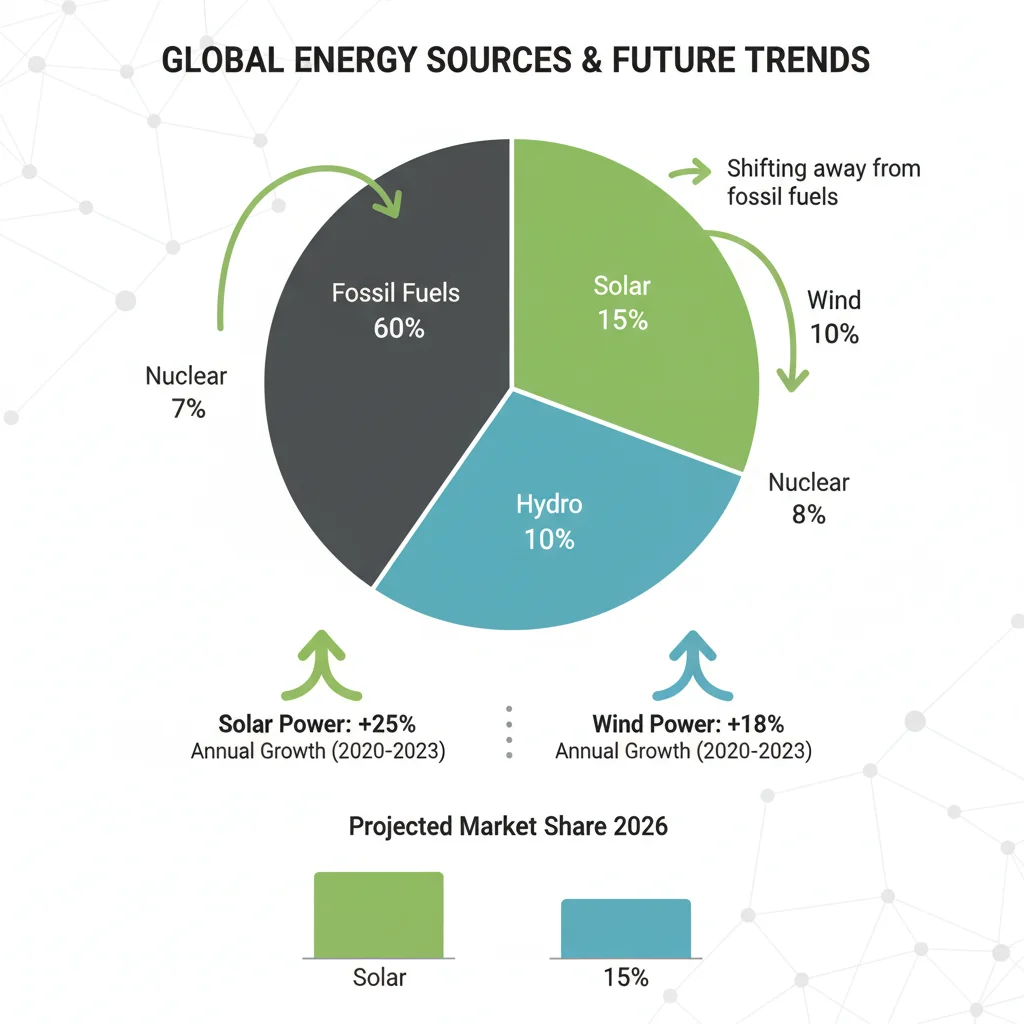
While geopolitics introduces volatility, the accelerating adoption of renewable energy sources offers a crucial counterbalance, promising greater stability and, in the long term, potentially lower energy prices 2026. Solar, wind, hydropower, and geothermal energy are becoming increasingly cost-competitive, challenging the dominance of fossil fuels.
Declining Costs of Renewable Technologies
The past decade has witnessed a dramatic reduction in the cost of renewable energy technologies. The price of solar photovoltaic (PV) panels, for example, has plummeted, making solar power an economically viable option for many regions. Similarly, advancements in wind turbine technology have made wind farms more efficient and less expensive to build and operate. This downward trend in technology costs is expected to continue, making renewable energy an even more attractive investment by energy prices 2026. As more renewable capacity comes online, it displaces more expensive fossil fuel generation, putting downward pressure on overall electricity prices.
Increased Energy Independence and Security
One of the most significant benefits of renewable energy is its ability to enhance energy independence. Nations that invest heavily in domestic renewable sources reduce their reliance on imported fossil fuels, thereby insulating themselves from the geopolitical risks associated with international energy markets. This increased energy security can lead to more stable energy prices 2026 domestically, as countries are less susceptible to global price shocks caused by distant conflicts or supply disruptions. Governments are increasingly recognizing this strategic advantage, driving further investment and policy support for renewables.
Grid Integration and Storage Challenges
Despite the immense potential, the integration of intermittent renewable sources like solar and wind into existing grids presents challenges. The sun doesn’t always shine, and the wind doesn’t always blow, necessitating robust energy storage solutions and smart grid technologies. While significant progress is being made in battery storage and grid modernization, these investments come with costs that can, in the short term, influence energy prices 2026. However, as these technologies mature and scale, their long-term impact is expected to be positive, contributing to a more resilient and cost-effective energy system.
The Impact on Household Utility Costs: A 7% Fluctuation?
The convergence of geopolitical pressures and renewable energy expansion will undoubtedly translate into tangible effects on household utility costs in 2026. While a precise forecast is challenging due to the inherent uncertainties, a 7% fluctuation – either upwards or downwards – is a reasonable benchmark to consider based on current market dynamics and expert analyses. This percentage represents a significant swing that can impact household budgets.
Electricity Bills: A Mix of Factors
For electricity, the impact will be a mixed bag. Regions with high penetration of renewables and robust grid infrastructure may see more stable or even declining prices as the cost of generating electricity from solar and wind continues to fall. However, areas still heavily reliant on fossil fuels for electricity generation will remain vulnerable to global commodity price swings. Furthermore, investments in grid modernization and the retirement of older, less efficient power plants could introduce additional costs that might temporarily increase energy prices 2026 for consumers.
Heating Costs: Natural Gas and Beyond
Heating costs, particularly in regions heavily dependent on natural gas, are highly susceptible to geopolitical events and supply-demand imbalances. The global natural gas market has been particularly volatile recently, and this trend could persist into energy prices 2026. Households transitioning to electric heat pumps, powered by increasingly renewable grids, might see more predictable costs. However, the initial investment in such technologies can be substantial, and the overall electricity price still plays a significant role.
Transportation Fuel Prices: Oil Market Dynamics
Transportation fuel prices, primarily gasoline and diesel, are directly tied to global crude oil prices. As discussed, these are heavily influenced by OPEC+ decisions, geopolitical stability, and global economic demand. While the long-term trend towards electric vehicles (EVs) offers a pathway to reduce reliance on volatile oil markets, the majority of vehicles in 2026 will still run on fossil fuels. Therefore, consumers can expect that energy prices 2026 at the pump will remain sensitive to global oil market dynamics, with potential for significant price swings.
Mitigating the Impact: Strategies for Consumers and Governments
Given the anticipated fluctuations in energy prices 2026, proactive strategies are essential for both individual households and governments to mitigate adverse impacts and capitalize on opportunities.
For Households: Empowering Energy Choices
Energy Efficiency Upgrades: Investing in better insulation, energy-efficient appliances, and smart thermostats can significantly reduce energy consumption and, consequently, utility bills. These upfront investments often yield substantial long-term savings.
Renewable Energy Adoption: For those with the means, installing rooftop solar panels or participating in community solar programs can lock in predictable electricity costs and reduce reliance on grid electricity, directly impacting energy prices 2026.
Smart Energy Management: Utilizing smart home technologies to monitor and control energy usage can help identify areas for savings and optimize consumption during off-peak hours when electricity is cheaper.
Budgeting and Financial Planning: Being aware of potential price fluctuations and budgeting accordingly can help households absorb unexpected increases in utility costs.
For Governments and Policymakers: Shaping a Resilient Future
Accelerated Renewable Investment: Continued and increased investment in renewable energy infrastructure, including generation, transmission, and storage, is crucial for long-term energy security and price stability.
Grid Modernization: Upgrading electricity grids to be smarter, more resilient, and capable of handling a higher penetration of intermittent renewables is vital.
International Cooperation: Fostering diplomatic solutions to geopolitical conflicts and promoting stable international relations can help minimize disruptions to global energy supplies.
Consumer Protection and Support: Implementing policies that protect vulnerable households from extreme price shocks, suchando as energy assistance programs or price caps, can ensure equitable access to essential energy services.
Research and Development: Continued funding for R&D in advanced energy technologies, including next-generation renewables, energy storage, and carbon capture, will be critical for future energy solutions.
Technological Innovations and Their Role in Energy Prices 2026
Beyond the geopolitical landscape and the established renewable technologies, emerging innovations will also play a significant role in shaping energy prices 2026 and beyond. These advancements promise to enhance efficiency, reduce costs, and introduce new energy solutions.
Advanced Battery Storage
The evolution of battery technology is a game-changer for renewable energy integration. Beyond lithium-ion, research into solid-state batteries, flow batteries, and other novel chemistries promises higher energy density, longer lifespans, and lower manufacturing costs. As these technologies mature, they will make grid-scale energy storage more economical, effectively smoothing out the intermittency of solar and wind power. This will allow for greater reliance on renewables, pushing down the overall cost of electricity and positively impacting energy prices 2026 by ensuring a more consistent supply.
Green Hydrogen Production
Green hydrogen, produced through electrolysis powered by renewable energy, is emerging as a critical vector for decarbonizing hard-to-abate sectors like heavy industry, long-haul transport, and seasonal energy storage. While still in its nascent stages, significant investments are being made to scale up green hydrogen production. By energy prices 2026, we might see initial commercial applications and a clearer pathway for its cost-competitiveness, potentially offering a new, clean energy source that can influence overall energy market dynamics.
Small Modular Reactors (SMRs)
Nuclear energy, particularly in the form of Small Modular Reactors (SMRs), is being reconsidered as a reliable, low-carbon baseload power source. SMRs promise lower capital costs, shorter construction times, and enhanced safety features compared to traditional large-scale nuclear plants. While widespread deployment by energy prices 2026 is unlikely, initial projects and regulatory approvals could set the stage for nuclear power to play a more significant role in the energy mix in the following decades, contributing to a diversified and stable energy supply.
Carbon Capture, Utilization, and Storage (CCUS)
For industries that cannot fully decarbonize through electrification or renewables alone, Carbon Capture, Utilization, and Storage (CCUS) technologies offer a solution. While controversial to some, CCUS could allow for continued use of certain fossil fuel assets with reduced emissions. The cost-effectiveness and scalability of CCUS will be crucial, and its development could influence the long-term viability and pricing of fossil fuels, thereby indirectly affecting energy prices 2026 for sectors still reliant on them.
Regional Variations in Energy Prices 2026
It’s crucial to acknowledge that the impact of these global trends on energy prices 2026 will not be uniform across all regions. Local policies, existing energy infrastructure, and the specific energy mix of each country or even state will lead to significant variations.
Europe: Navigating Gas Dependency and Green Transition
European nations, particularly those heavily reliant on Russian natural gas, have faced immense price volatility. By energy prices 2026, many will have accelerated their transition to renewables and diversified gas suppliers (e.g., LNG imports). This shift aims to reduce geopolitical vulnerability, but the cost of building new infrastructure and the premium paid for diversified supplies could keep prices elevated in the short to medium term, even as renewable generation expands.
North America: Shale Gas Abundance and Renewable Growth
North America, particularly the United States, benefits from abundant domestic shale gas, which has historically kept natural gas prices relatively low. However, regional differences in electricity markets and renewable energy penetration will lead to varied outcomes for energy prices 2026. States with strong renewable energy mandates and significant solar/wind capacity might see more stable or even declining electricity costs, while others might still be exposed to fossil fuel market fluctuations.
Asia-Pacific: Rising Demand and Investment in All Sources
The Asia-Pacific region is characterized by rapidly growing energy demand. Countries like China and India are making massive investments in both renewables and traditional fossil fuels to meet their energy needs. The balance between these investments, coupled with geopolitical factors in the South China Sea and other strategic areas, will dictate energy prices 2026. The region’s hunger for energy means that even small disruptions can have a large impact on global markets and local prices.
Developing Nations: Balancing Affordability and Sustainability
Developing nations face a unique challenge: providing affordable energy access to growing populations while simultaneously pursuing sustainable development goals. For energy prices 2026, these countries will likely see a mix of traditional and renewable energy projects. International financing and technology transfer will be crucial in helping them transition to cleaner energy without unduly burdening their economies or households with high utility costs.
Conclusion: Preparing for the Evolving Energy Landscape of 2026
The forecast for energy prices 2026 paints a picture of continued evolution, marked by the powerful interplay of geopolitical forces and the accelerating renewable energy transition. While the exact magnitude of price fluctuations remains subject to numerous variables, a potential 7% shift in household utility costs is a realistic scenario that demands attention. Geopolitical tensions will continue to introduce volatility and supply risks, particularly for fossil fuels, pushing prices upwards in times of crisis.
Conversely, the relentless march of renewable energy technologies, with their declining costs and increasing efficiency, offers a powerful mitigating force. As more solar, wind, and other clean energy sources come online, they will increasingly stabilize electricity prices and reduce overall dependence on volatile international commodity markets. The development of advanced storage solutions and smart grid technologies will further enhance the reliability and cost-effectiveness of a renewable-dominated energy system.
For households, understanding these dynamics means making informed choices about energy consumption, exploring efficiency upgrades, and considering personal renewable energy solutions. For governments and industries, it necessitates continued investment in sustainable infrastructure, robust energy policies, and proactive diplomatic engagement to ensure energy security and affordability. The year energy prices 2026 will not merely be a continuation of past trends; it will be a testament to how effectively the world adapts to a new energy paradigm, balancing the imperatives of security, sustainability, and economic viability. Proactive planning and adaptability will be key to navigating the future energy landscape successfully.
Matheus Neiva has a degree in Communication and a specialization in Digital Marketing. Working as a writer, he dedicates himself to researching and creating informative content, always seeking to convey information clearly and accurately to the public.