Understanding the 2026 Fed Rate Hikes: How to Adjust Your Fixed-Income Investment Strategy for Optimal Returns
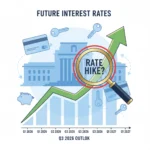
The financial landscape is ever-evolving, and astute investors constantly monitor key indicators to position their portfolios for success. Among the most impactful of these indicators are the actions of the Federal Reserve. As we look towards 2026, the prospect of further 2026 Fed Rate Hikes looms, creating both challenges and opportunities for fixed-income investors. This comprehensive guide will delve into the potential implications of these hikes, offering actionable strategies to adjust your fixed-income investment approach and optimize returns in a dynamic economic environment.
Understanding the Federal Reserve’s role and its influence on interest rates is paramount. The Fed, as the central bank of the United States, uses monetary policy tools to promote maximum employment, stable prices, and moderate long-term interest rates. When the economy is overheating, and inflation becomes a concern, the Fed typically raises interest rates to cool down economic activity. Conversely, during economic downturns, it lowers rates to stimulate growth. The anticipation of 2026 Fed Rate Hikes suggests that the Fed may foresee inflationary pressures or a robust economy requiring a more restrictive monetary stance. For fixed-income investors, this translates into a critical need for strategic adjustments to their portfolios.
The Federal Reserve’s Mandate and the Rationale Behind Rate Hikes
To effectively navigate the impact of potential 2026 Fed Rate Hikes, it’s essential to grasp the core objectives of the Federal Reserve. The Fed operates under a dual mandate: to achieve maximum sustainable employment and maintain price stability. These goals are often intertwined, and the Fed’s decisions on interest rates are a primary mechanism for achieving them. When inflation starts to accelerate beyond the Fed’s target of 2%, or when the economy demonstrates strong and sustained growth, the Fed might consider raising the federal funds rate. This rate, though not directly an interest rate that consumers pay, serves as a benchmark for many other interest rates in the economy, including those on bonds, mortgages, and savings accounts.
The rationale for anticipating 2026 Fed Rate Hikes could stem from several factors. It might indicate a sustained period of economic expansion, where strong consumer demand and business investment could lead to inflationary pressures. Supply chain disruptions, geopolitical events, or shifts in global trade policies could also contribute to rising prices, prompting the Fed to act. Furthermore, if the labor market continues to tighten, with wages increasing significantly, it could also fuel inflation, necessitating a more hawkish monetary policy. Investors must consider these underlying economic conditions when forecasting future Fed actions and their impact on fixed-income investments.
Historical Context of Fed Rate Cycles
Examining historical Fed rate cycles can provide valuable insights into how markets react to rising interest rates. In previous periods of tightening, such as the early 2000s or the mid-2010s, fixed-income assets generally faced headwinds. Bond prices typically move inversely to interest rates; as rates rise, the value of existing bonds with lower coupon payments tends to fall. However, the extent of this impact varies depending on the bond’s duration, credit quality, and other characteristics.
Understanding these historical patterns doesn’t predict the future with certainty, but it offers a framework for anticipating potential market behaviors during 2026 Fed Rate Hikes. Each cycle has its unique nuances, influenced by prevailing economic conditions, technological advancements, and global financial dynamics. Therefore, while history provides a guide, a forward-looking and adaptable strategy is crucial.
Impact of 2026 Fed Rate Hikes on Fixed-Income Investments
The direct and indirect consequences of 2026 Fed Rate Hikes on fixed-income investments are multifaceted. Primarily, rising rates reduce the attractiveness of existing bonds that carry lower fixed coupon payments. New bonds issued after a rate hike will offer higher yields, making older, lower-yielding bonds less desirable and pushing their market prices down. This inverse relationship between bond prices and interest rates is fundamental to fixed-income investing.
Bond Prices and Yields
When the Federal Reserve raises its benchmark rate, the yield on newly issued bonds tends to increase. For instance, if you hold a bond purchased when rates were lower, and the Fed raises rates, the market value of your bond will likely decrease to make its effective yield competitive with newer, higher-yielding bonds. This is particularly true for longer-duration bonds, which are more sensitive to interest rate changes. The longer the time until maturity, the greater the impact of a rate change on the bond’s price.
Duration Risk
Duration is a key concept for fixed-income investors. It measures a bond’s price sensitivity to changes in interest rates. Bonds with higher durations are more sensitive to rate changes than those with lower durations. As we consider potential 2026 Fed Rate Hikes, investors holding long-duration bonds face greater duration risk. Conversely, short-duration bonds and cash equivalents tend to be less affected by rising rates, making them potentially more attractive in such an environment.
Credit Risk and Spreads
While often overshadowed by duration risk, credit risk also plays a role. In a rising rate environment, especially if it’s accompanied by economic slowdown concerns, the spread between government bonds (considered risk-free) and corporate bonds (which carry credit risk) can widen. Investors may demand higher compensation for taking on credit risk, leading to lower prices for corporate bonds. Therefore, assessing the credit quality of your fixed-income holdings becomes even more critical when anticipating 2026 Fed Rate Hikes.
Strategies to Adjust Your Fixed-Income Portfolio for 2026 Fed Rate Hikes
Proactive adjustment is key to mitigating risks and seizing opportunities during periods of rising interest rates. Here are several strategies fixed-income investors can consider in anticipation of 2026 Fed Rate Hikes:
1. Shorten Duration
One of the most common and effective strategies in a rising rate environment is to shorten the duration of your fixed-income portfolio. This involves shifting investments from long-term bonds to short-term bonds or money market instruments. Short-term bonds are less sensitive to interest rate fluctuations, meaning their prices will fall less dramatically if rates rise. This strategy also allows investors to reinvest maturing short-term securities at potentially higher yields as rates increase, thereby capturing the benefits of the rate hikes.
2. Laddering Your Bond Portfolio
Bond laddering is a strategy where an investor divides their investment into several bonds with varying maturity dates. For example, instead of investing all capital in a 10-year bond, an investor might buy bonds maturing in 1, 3, 5, 7, and 10 years. As the shorter-term bonds mature, the proceeds can be reinvested into new, longer-term bonds at current market rates. This strategy helps to smooth out the impact of interest rate changes, as some bonds are always maturing and can be reinvested at potentially higher yields during 2026 Fed Rate Hikes.

3. Consider Floating-Rate Securities
Floating-rate notes (FRNs) or variable-rate demand obligations (VRDOs) are fixed-income instruments whose coupon payments adjust periodically based on a benchmark interest rate (e.g., LIBOR or the federal funds rate). As interest rates rise, the coupon payments on these securities also increase, making them less susceptible to price depreciation than fixed-rate bonds. Investing in floating-rate securities can be an excellent way to hedge against 2026 Fed Rate Hikes, as they allow investors to benefit directly from rising rates.
4. Explore Treasury Inflation-Protected Securities (TIPS)
TIPS are government-issued bonds designed to protect investors from inflation. Their principal value adjusts with the Consumer Price Index (CPI), and their interest payments are calculated based on the adjusted principal. While TIPS are sensitive to real interest rates (nominal rates minus inflation), they can offer a degree of protection against inflationary pressures that often accompany or precede Fed rate hikes. If the 2026 Fed Rate Hikes are a response to persistent inflation, TIPS could be a valuable addition to a fixed-income portfolio.
5. Re-evaluate High-Yield Bonds and Emerging Market Debt
High-yield bonds (junk bonds) and emerging market debt carry higher credit risk but also offer higher potential returns. Their performance during rising rate environments can be mixed. If the rate hikes are a sign of a strong global economy, these assets might perform well due to improving credit fundamentals. However, if the rate hikes are perceived as a threat to economic growth or liquidity, these riskier assets could face significant pressure. Careful due diligence on the underlying credit quality and economic outlook of these regions is crucial.
6. Utilize Actively Managed Bond Funds
For investors who prefer a hands-off approach, actively managed bond funds can be a viable option. Professional fund managers have the expertise and resources to dynamically adjust the fund’s duration, credit exposure, and sector allocation in response to changing interest rate environments. A skilled manager can strategically position the fund to mitigate the negative impacts of 2026 Fed Rate Hikes and potentially capitalize on opportunities. However, it’s important to evaluate the fund manager’s track record and investment philosophy.
Broader Economic Implications of 2026 Fed Rate Hikes
Beyond direct impacts on fixed-income portfolios, 2026 Fed Rate Hikes can have broader economic consequences that indirectly affect investment decisions. These include impacts on borrowing costs, corporate earnings, and consumer spending.
Borrowing Costs and Economic Growth
Higher interest rates mean higher borrowing costs for businesses and consumers. This can lead to a slowdown in economic growth as companies defer expansion plans and consumers reduce spending on big-ticket items like homes and cars. A slower economy might, in turn, affect corporate profitability and potentially lead to a flight to quality in investment markets, impacting riskier fixed-income assets.
Currency Strength
Rising interest rates in the U.S. can make dollar-denominated assets more attractive to foreign investors seeking higher yields. This increased demand for the dollar can lead to its appreciation against other currencies. A stronger dollar can have mixed effects: it makes imports cheaper but makes U.S. exports more expensive, potentially impacting multinational corporations’ earnings and the competitiveness of domestic industries.
Inflation Outlook
The primary goal of 2026 Fed Rate Hikes is often to control inflation. If the hikes are successful, they could lead to a more stable price environment, which is beneficial for the long-term purchasing power of fixed-income investments. However, the path to disinflation can be bumpy, and investors must remain vigilant about inflation trends and the Fed’s response.
Monitoring Key Indicators and Staying Informed
Successful navigation of potential 2026 Fed Rate Hikes requires continuous monitoring of economic indicators and Federal Reserve communications. Here are some key areas to watch:
Inflation Data
Keep a close eye on inflation reports, such as the Consumer Price Index (CPI) and the Personal Consumption Expenditures (PCE) price index. These are the Fed’s preferred measures of inflation, and significant deviations from their 2% target are likely to influence their rate decisions.
Employment Reports
The monthly jobs report, including non-farm payrolls, unemployment rate, and wage growth, provides crucial insights into the health of the labor market. A strong labor market with rising wages can signal potential inflationary pressures and prompt the Fed to act.
GDP Growth
Gross Domestic Product (GDP) reports indicate the overall health and growth trajectory of the economy. Sustained strong GDP growth might provide the Fed with room to raise rates without fear of tipping the economy into recession.

Federal Reserve Statements and Speeches
Pay close attention to statements from the Federal Open Market Committee (FOMC) and speeches by Fed officials. These communications often provide forward guidance on monetary policy and reveal the Fed’s outlook on the economy and inflation. The minutes from FOMC meetings can also offer detailed insights into the discussions and varying viewpoints among policymakers regarding future rate actions.
Yield Curve Analysis
The yield curve, which plots the yields of bonds with different maturities, is a powerful economic indicator. An inverted yield curve (where short-term bond yields are higher than long-term bond yields) has historically been a reliable predictor of recessions. Monitoring its shape can offer clues about market expectations for future interest rates and economic growth, which are directly relevant to potential 2026 Fed Rate Hikes.
Conclusion: Adapting to the Future of Fixed Income
The prospect of 2026 Fed Rate Hikes underscores the importance of a dynamic and well-considered fixed-income investment strategy. While rising rates can present challenges, they also create opportunities for investors who are prepared to adapt. By understanding the Fed’s mandate, monitoring key economic indicators, and implementing strategic adjustments such as shortening duration, laddering bonds, considering floating-rate securities, and exploring inflation-protected assets, investors can navigate this environment effectively.
Ultimately, a diversified portfolio that aligns with your risk tolerance and financial goals remains paramount. The fixed-income market is complex, and the impact of Fed actions can be nuanced. Staying informed, seeking professional advice when needed, and maintaining a long-term perspective will be crucial for optimizing returns and protecting capital in the face of anticipated 2026 Fed Rate Hikes.
Remember, while this article provides general guidance, individual circumstances vary. Consulting with a qualified financial advisor can help tailor these strategies to your specific investment objectives and risk profile, ensuring your portfolio is robust enough to withstand and potentially thrive amidst future interest rate changes.