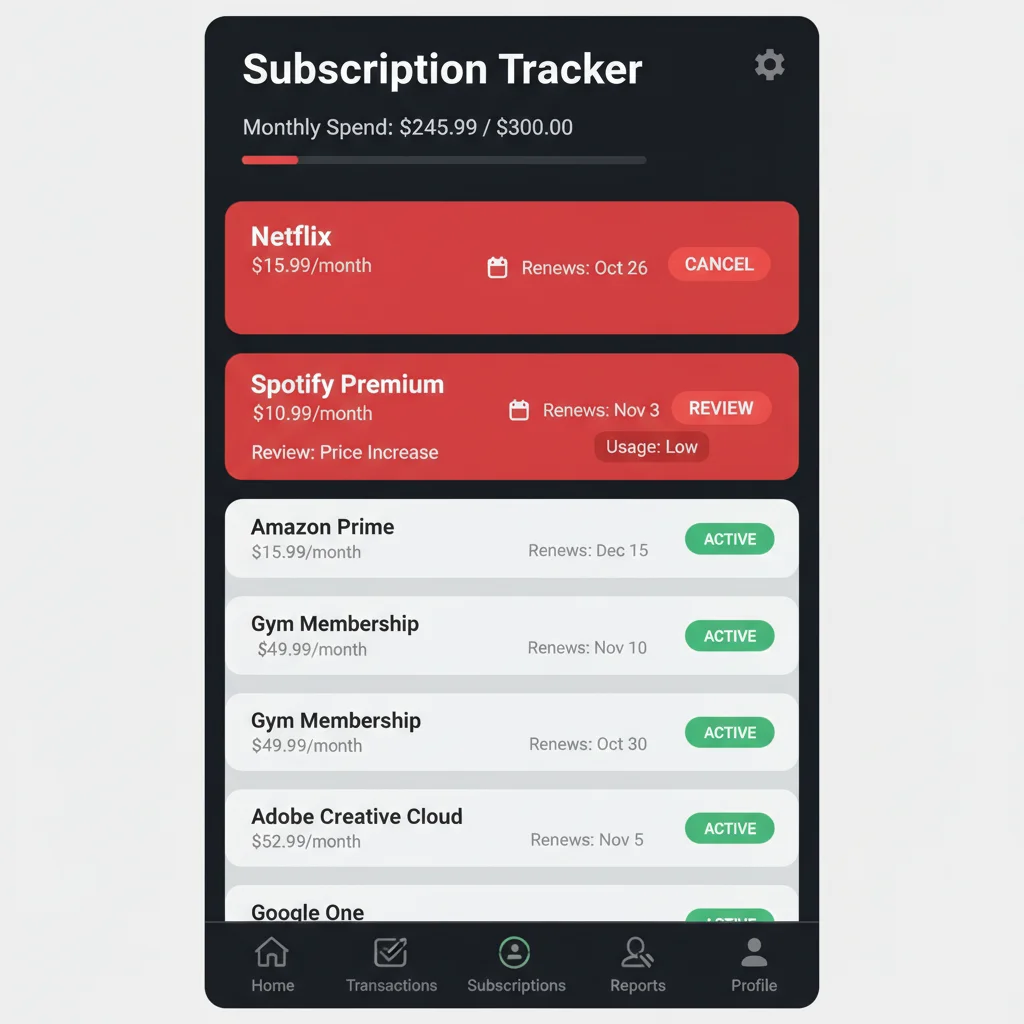
Discover how to identify and eliminate hidden subscription costs in 2026. This comprehensive guide provides actionable strategies to track, review, and cancel unwanted services, helping you save money and achieve financial peace of mind.
By: Matheus Neiva on February 26, 2026
Last updated on: July 31, 2026
Smart Spending in 2026: Identify and Eliminate 5 Hidden Subscription Costs Now
In an increasingly digital world, the convenience of subscriptions has become a double-edged sword. While they offer unparalleled access to entertainment, software, and services, they also harbor a sneaky threat to your financial well-being: Hidden Subscription Costs. As we navigate 2026, it’s more crucial than ever to become a vigilant guardian of your wallet. These often-overlooked expenses can silently drain hundreds, if not thousands, of dollars from your bank account each year, leaving you wondering where your money went. This comprehensive guide will empower you to identify, track, and ruthlessly eliminate these financial vampires, ensuring your hard-earned cash stays where it belongs – with you.
The rise of the subscription economy has made it incredibly easy to sign up for trials, forget to cancel, and accumulate services you no longer use or even remember. From streaming platforms to fitness apps, cloud storage to premium news content, the list of potential culprits is endless. The challenge isn’t just knowing what you’ve signed up for; it’s understanding the subtle ways these costs can escalate and how to effectively combat them. Our focus today is on practical, actionable strategies to tackle Hidden Subscription Costs head-on, transforming your financial habits for a more secure future.
The Silent Drain: Understanding Why Hidden Subscription Costs Are So Prevalent
Before we dive into the ‘how-to,’ let’s understand the ‘why.’ Why are Hidden Subscription Costs such a pervasive problem in 2026? Several factors contribute to this modern financial dilemma:
1. The Trial-to-Paid Conversion Trap
Many services offer enticing free trials, promising a taste of their premium features. The catch? They often require your payment information upfront, and if you don’t cancel before the trial ends, you’re automatically enrolled in a paid subscription. Life gets busy, and that mental note to cancel often gets forgotten until the first charge appears – or worse, several charges accumulate.
2. ‘Set It and Forget It’ Mentality
Once a subscription is active, it tends to fade into the background of our financial consciousness. Monthly or annual payments become just another line item on a bank statement, easily overlooked amidst other transactions. This ‘set it and forget it’ approach is precisely what companies rely on to maintain their subscriber base, even if usage dwindles.
3. The Sheer Volume of Digital Services
Think about how many digital services you interact with daily. Streaming, music, news, productivity tools, gaming, fitness, meditation – the list goes on. Each of these represents a potential subscription. Managing this ever-growing portfolio of services manually becomes an overwhelming task, making it easy for Hidden Subscription Costs to slip through the cracks.
4. Price Hikes and Tier Changes
Even if you’re aware of a subscription, companies can implement price increases or change their service tiers without explicit, attention-grabbing notifications. These subtle adjustments can lead to higher monthly or annual fees, adding to your Hidden Subscription Costs without you actively opting into the new price point.
5. Bundling and Promotional Offers
Sometimes, you sign up for a service as part of a larger bundle or a promotional offer. Once the promotional period ends, the price often jumps significantly, or individual services that were once free within the bundle become separate, paid subscriptions. If you don’t review these terms carefully, you could be paying for services you thought were included or were much cheaper.
Understanding these mechanisms is the first step towards taking control. Now, let’s arm ourselves with the tools and strategies to tackle these Hidden Subscription Costs effectively.
Strategy 1: The Grand Audit – Unearthing Every Subscription
The most crucial step in eliminating Hidden Subscription Costs is knowing what you’re actually paying for. This requires a thorough, systematic audit of your financial records. Think of yourself as a financial detective, meticulously searching for clues.
Step 1.1: Gather Your Financial Statements
Collect bank statements, credit card statements, and PayPal transaction histories for the past 12-18 months. Go back further if you suspect very old, forgotten subscriptions. Digital statements are usually easily accessible through your bank’s or credit card provider’s online portal.
Step 1.2: Create a Master List
As you review each statement, create a master list of every recurring charge. Don’t just look for obvious names like ‘Netflix’ or ‘Spotify.’ Pay close attention to ambiguous charges, small amounts that appear regularly, or entries with unfamiliar vendor names. These are often the tell-tale signs of Hidden Subscription Costs.
For each entry, record:
Service Name (or as much detail as you have)
Monthly/Annual Cost
Payment Date
Payment Method (which card or bank account)
Frequency (monthly, annual, quarterly)
Status (Active, Unknown)
Step 1.3: Utilize Financial Tracking Apps
In 2026, technology is your ally. Many personal finance apps (e.g., Mint, YNAB, Rocket Money, Truebill) can automatically scan your accounts and identify recurring subscriptions. While these tools are incredibly helpful, they aren’t foolproof. Always cross-reference their findings with your manual review to ensure no Hidden Subscription Costs are missed.
Step 1.4: Check Your Email
Search your email inboxes for keywords like ‘subscription,’ ‘renewal,’ ‘trial,’ ‘invoice,’ ‘receipt,’ or ‘membership.’ Companies often send confirmation emails when you sign up, payment reminders, or notices about renewals. This can uncover subscriptions you’ve completely forgotten about or didn’t realize had auto-renewed.
Step 1.5: Review App Store Subscriptions
If you have a smartphone, check your Apple App Store or Google Play Store subscription settings. Many apps offer in-app purchases or subscriptions that are managed directly through these platforms, and they might not always appear clearly on your bank statements as a distinct vendor.
Strategy 2: The Value Proposition – Deciding What Stays and What Goes
Once you have your master list of all recurring charges, the next step is to evaluate each one. This is where you determine which subscriptions are genuinely worth their cost and which are contributing to your Hidden Subscription Costs problem.
Step 2.1: Assess Usage and Value
Go through your list and honestly ask yourself for each subscription:
How often do I use this service? (Daily, weekly, monthly, rarely, never?)
What value does it bring to my life? (Essential, convenient, enjoyable, negligible?)
Could I get similar benefits for free or cheaper elsewhere?
Do I even remember signing up for this?
Be ruthless in your assessment. That streaming service you signed up for to watch one show and haven’t touched since? It’s a prime candidate for elimination. That fitness app you used for two weeks in January? If it’s been collecting dust virtually, it’s a Hidden Subscription Cost.
Step 2.2: Categorize Your Subscriptions
Assign a category to each subscription:
Keep: Services you use regularly and genuinely value.
Cancel: Services you don’t use, don’t value, or forgot about.
Negotiate/Downgrade: Services you value but might be overpaying for, or could get a cheaper tier.
Step 2.3: Look for Overlap
Are you paying for multiple services that offer similar benefits? For instance, do you have two cloud storage providers, or multiple news subscriptions when one would suffice? Consolidating or choosing the best option can significantly reduce Hidden Subscription Costs.
Strategy 3: The Cancellation Offensive – Eliminating Unwanted Services
Now comes the satisfying part: cutting those unnecessary expenses. Canceling subscriptions can sometimes feel like navigating a maze, but persistence pays off in the battle against Hidden Subscription Costs.
Step 3.1: Direct Cancellation Methods
For most services, the cancellation process is straightforward:
Website: Log into your account on the service’s website and look for ‘Account Settings,’ ‘Billing,’ ‘Subscriptions,’ or ‘Manage Membership.’
App Store: For mobile apps, manage subscriptions directly through your device’s app store settings (Apple App Store or Google Play Store).
Email/Phone: Some older or less tech-savvy services might require an email or phone call to cancel. Be prepared for potential attempts to retain you as a customer with special offers.
If you’re overwhelmed, some financial management apps (like Rocket Money or Truebill) offer a concierge service that can cancel subscriptions on your behalf. While convenient, always understand their terms and any associated fees. This can be a great way to tackle particularly stubborn Hidden Subscription Costs.
Step 3.3: The ‘Virtual Card’ Strategy for Trials
For future free trials, consider using a virtual credit card service (offered by some banks or fintech companies). These allow you to generate single-use or merchant-locked card numbers with spending limits. You can set a limit of $0 or a very low amount for trials. If you forget to cancel, the virtual card will decline the charge, preventing unwanted Hidden Subscription Costs.
Step 3.4: Review Your Bank’s Recurring Payments
Some banks allow you to view and manage recurring payments directly from their online banking portal. You might even have the option to block future payments to a specific vendor. Check with your bank to see what features are available to help you control Hidden Subscription Costs.
Strategy 4: Negotiation and Downgrading – Smart Savings
Not every subscription needs to be outright canceled. Sometimes, you can significantly reduce Hidden Subscription Costs through negotiation or by opting for a lower-tier service.
Step 4.1: Call and Negotiate
For services you value but find too expensive, call their customer service. Explain that you’re considering canceling due to cost. Many companies have retention departments authorized to offer discounts, special promotions, or lower-priced plans to keep you as a customer. This is especially effective for services like internet, cable, or security systems where competition is high.
Step 4.2: Downgrade Your Plan
Do you really need the premium tier of every service? Evaluate if a basic or mid-tier plan would suffice. For example, if you rarely download content, a lower-tier streaming plan might be perfectly adequate. This simple step can shave off a few dollars here and there, collectively reducing your overall Hidden Subscription Costs.
Step 4.3: Annual vs. Monthly Billing
Many services offer a discount if you pay annually instead of monthly. If you’re committed to a service and know you’ll use it for the long term, switching to an annual plan can lead to significant savings and reduce the number of monthly transactions you need to track, making it easier to spot other Hidden Subscription Costs.
Step 4.4: Share Accounts (Where Permitted)
For family-oriented services like streaming or music, ensure you’re utilizing family plans or sharing options where permitted by the service’s terms. This allows multiple users to share a single subscription, effectively reducing the per-person cost and preventing each individual from accumulating separate Hidden Subscription Costs.
Once you’ve cleaned up your current subscriptions, the goal is to prevent future Hidden Subscription Costs from accumulating. This requires adopting new habits and tools.
Step 5.1: Implement a Regular Review Schedule
Don’t let your guard down. Schedule a monthly or quarterly review of your subscriptions. Set a reminder in your calendar. This dedicated time will allow you to quickly identify new charges, assess ongoing value, and catch any emerging Hidden Subscription Costs before they become substantial.
Step 5.2: Use a Dedicated Subscription Manager
Consider using a dedicated subscription management app or a simple spreadsheet to keep a running tally of all your active subscriptions, their costs, and renewal dates. This centralized hub makes it easy to monitor and manage, preventing anything from becoming a hidden expense.
Step 5.3: Be Wary of ‘Free’ Trials
Before signing up for any free trial, ask yourself if you genuinely intend to use the service long-term. If not, make an immediate note in your calendar to cancel before the trial period ends. Set a reminder a few days in advance. This proactive step is crucial in avoiding accidental Hidden Subscription Costs.
Step 5.4: Read the Fine Print
It sounds tedious, but take a moment to understand the terms and conditions, especially regarding billing and cancellation policies, before committing to any new subscription. Knowledge is power in preventing unforeseen Hidden Subscription Costs.
Step 5.5: Consolidate Payment Methods
If possible, try to route most of your subscriptions through one or two primary payment methods. This makes it easier to track and audit your recurring expenses, as you won’t have to check numerous cards or bank accounts for Hidden Subscription Costs.
Step 5.6: Leverage Browser Extensions for Price Tracking
Some browser extensions can track price changes for various online services. While not directly for subscriptions, they can alert you to potential increases in services you might be considering, helping you make informed decisions and avoid unexpected jumps in your Hidden Subscription Costs.
The Long-Term Impact of Eliminating Hidden Subscription Costs
The effort you put into identifying and eliminating Hidden Subscription Costs will pay dividends far beyond simply saving money. It fosters a greater sense of financial control and awareness. Imagine reclaiming an extra $50, $100, or even $200+ each month! What could you do with that money?
Boost your savings: Redirect those funds into an emergency fund, retirement account, or a down payment for a house.
Pay down debt: Accelerate your debt repayment strategy, freeing up future income.
Invest in yourself: Use the savings for education, a new skill, or a personal development course.
Enjoy guilt-free spending: Allocate the reclaimed money to experiences or purchases that truly bring you joy, rather than forgotten services.
Eliminating Hidden Subscription Costs is not just about cutting expenses; it’s about optimizing your spending to align with your true priorities and financial goals for 2026 and beyond. It’s about being intentional with every dollar you spend.
Conclusion: Your Path to Financial Freedom from Hidden Subscription Costs
The journey to financial wellness in 2026 involves more than just earning money; it requires smart spending and vigilant management. Hidden Subscription Costs are a insidious threat that can erode your budget and undermine your financial progress. By implementing the five strategies outlined in this guide – the Grand Audit, Value Proposition, Cancellation Offensive, Negotiation & Downgrading, and Proactive Prevention – you can take decisive action to reclaim your financial power.
Start today. Don’t let another month go by with your money silently slipping away to forgotten or unused services. Arm yourself with knowledge, leverage the available tools, and commit to a regular review process. By being proactive and disciplined, you will not only eliminate Hidden Subscription Costs but also cultivate healthier financial habits that will serve you well for years to come. Your future self (and your bank account) will thank you for taking control.
Remember, every dollar saved from a hidden subscription is a dollar earned back for your financial freedom. Make 2026 the year you master your subscriptions and truly optimize your smart spending.
Matheus Neiva has a degree in Communication and a specialization in Digital Marketing. Working as a writer, he dedicates himself to researching and creating informative content, always seeking to convey information clearly and accurately to the public.