
The landscape of the American workforce is in a perpetual state of flux, constantly reshaped by technological advancements, global economic forces, and evolving societal needs. As we look towards 2026, understanding the significant 2026 job market shifts is not just an academic exercise; it’s a critical imperative for policymakers, businesses, and individual workers alike. This comprehensive analysis aims to decode the anticipated transformations, highlight the key sectoral movements, and, crucially, examine their profound effect on wage growth for U.S. workers.
The U.S. economy, resilient and innovative, is navigating a complex period marked by post-pandemic recovery, accelerating automation, and a renewed focus on sustainability. These factors are converging to create a unique set of challenges and opportunities that will define the employment landscape in the coming years. By dissecting these trends, we can better prepare for the future, ensuring a more stable and prosperous working environment.
Understanding the Macroeconomic Drivers of 2026 Job Market Shifts
Before diving into specific sectors, it’s essential to grasp the overarching macroeconomic forces that will orchestrate the 2026 job market shifts. These drivers act as powerful currents, guiding the flow of capital, talent, and innovation across the economy.
Technological Revolution and Automation
Artificial intelligence (AI), machine learning, robotics, and advanced analytics are no longer futuristic concepts; they are integral components of today’s business operations. By 2026, their pervasive influence will have further automated routine tasks, augmented human capabilities, and created entirely new job categories. While concerns about job displacement are valid, history suggests that technological revolutions ultimately lead to net job creation, albeit with a significant shift in the types of skills required. The key will be how effectively the workforce can adapt to these new technological paradigms.
Demographic Changes and Labor Supply
The aging U.S. population continues to be a significant demographic factor. As baby boomers retire, there will be a continued need to fill crucial roles, particularly in sectors like healthcare. Immigration policies and birth rates will also play a role in shaping the overall labor supply. A tight labor market, often characterized by low unemployment rates, typically puts upward pressure on wages as employers compete for a limited pool of talent. Understanding these demographic nuances is vital for predicting wage trajectories.
Global Economic Integration and Supply Chains
The lessons learned from recent global disruptions, particularly concerning supply chain vulnerabilities, will continue to influence domestic manufacturing and logistics. There’s a growing impetus for reshoring and nearshoring production, which could stimulate job growth in certain manufacturing segments. However, global competition and trade policies will also dictate the pace and nature of these shifts, impacting wage competitiveness in internationally exposed industries.
Climate Change and Green Economy Transition
The urgency of addressing climate change is driving significant investment in renewable energy, sustainable technologies, and green infrastructure. This transition is expected to create a substantial number of new jobs in sectors like solar, wind, electric vehicles, and energy efficiency. These ‘green jobs’ often require specialized skills and could command higher wages due to demand and the novelty of the expertise.
Key Sectoral Shifts and Their Impact on Employment
The most discernible transformations within the 2026 job market shifts will occur at the sectoral level. Certain industries are poised for explosive growth, while others may experience contraction or significant restructuring.
Booming Sectors: Technology, Healthcare, and Green Industries
These three sectors are consistently identified as the primary engines of job growth leading up to and beyond 2026. Their expansion is driven by undeniable societal needs and technological breakthroughs.
Technology and Information Services
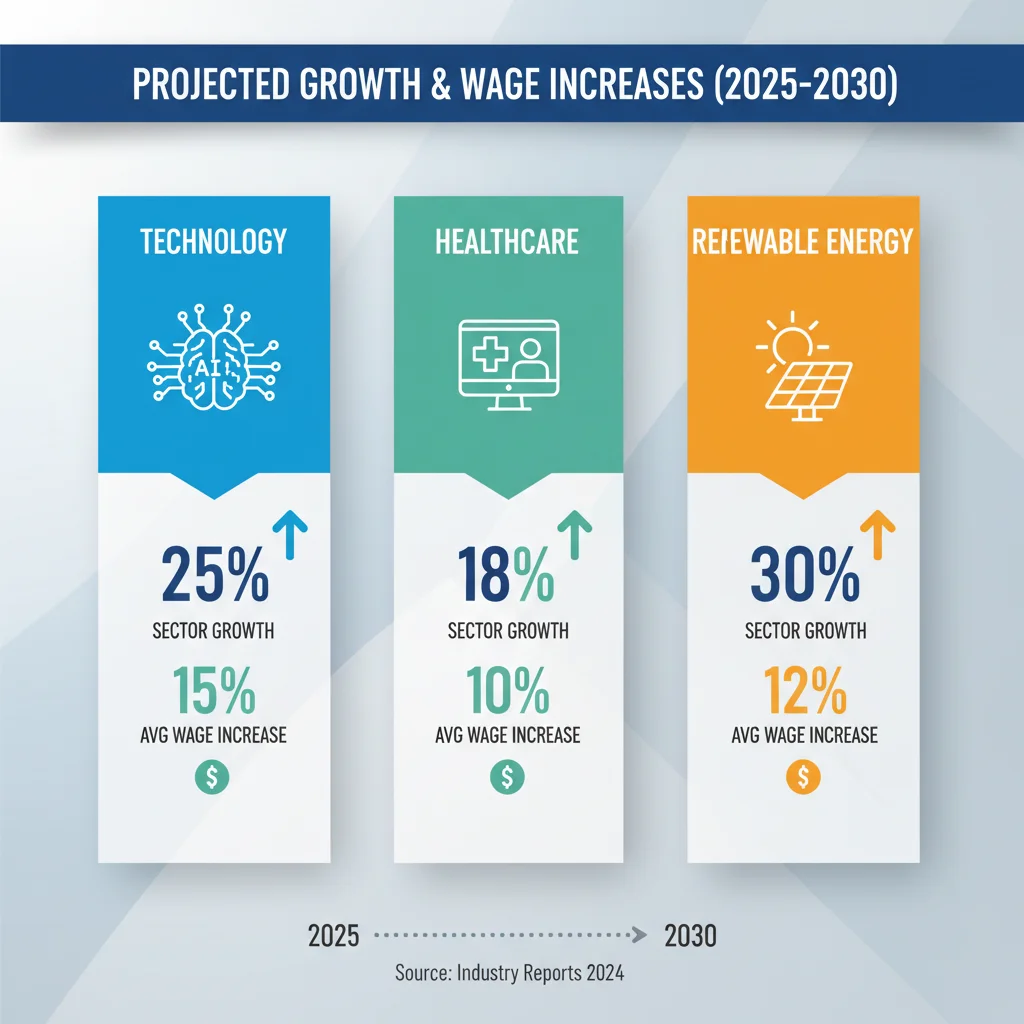
The demand for software developers, data scientists, cybersecurity specialists, AI engineers, and cloud architects will continue unabated. As businesses increasingly rely on digital infrastructure and data-driven decision-making, the talent pool in these areas will remain highly sought after. This high demand, coupled with the specialized nature of these skills, almost guarantees strong wage growth. Emerging fields like quantum computing and advanced virtual/augmented reality applications could also begin to create specialized, high-paying roles.
Healthcare and Social Assistance
An aging population and advancements in medical science will fuel sustained growth in healthcare. Roles for registered nurses, home health aides, physical therapists, medical assistants, and physicians will see consistent demand. While some entry-level positions might not see dramatic wage spikes, highly specialized medical professionals and those in emerging fields like bioinformatics or telemedicine will likely command premium salaries. The integration of AI in diagnostics and patient care will also create new opportunities for tech-savvy healthcare professionals.
Renewable Energy and Sustainability
The push for a greener economy will generate significant employment in areas like solar panel installation, wind turbine technicians, battery manufacturing, electric vehicle production, and environmental engineering. These jobs often require specific technical training and offer competitive wages, reflecting the investment and innovation in these critical industries. Urban planning roles focused on sustainable development and specialists in carbon capture technologies will also see increased relevance.
Adapting Sectors: Manufacturing, Retail, and Transportation
These sectors are not necessarily declining but are undergoing significant transformations due to automation and changing consumer behaviors.
Manufacturing
While traditional manufacturing jobs may continue to decline due to automation and offshoring, advanced manufacturing, particularly in areas like aerospace, medical devices, and high-tech components, is expected to grow. These roles often require higher-level skills in robotics, mechatronics, and data analytics. Wages in advanced manufacturing are generally higher than in traditional assembly-line roles, reflecting the specialized expertise required.
Retail Trade
The shift to e-commerce will continue to reshape the retail sector. While brick-and-mortar stores may see fewer sales associates, there will be increased demand for roles in logistics, supply chain management, digital marketing, and user experience design for online platforms. Wages for traditional retail roles might stagnate, but those with e-commerce and digital skills will find more lucrative opportunities.
Transportation and Warehousing
Automation in warehousing (robotics) and the advent of autonomous vehicles will significantly impact this sector. While truck drivers and logistics managers will remain essential, new roles related to managing automated fleets, drone operations, and complex supply chain software will emerge. The efficiency gains from automation could put downward pressure on wages for some manual labor roles, but specialized technicians for autonomous systems will be in high demand.
Challenged Sectors: Administrative Support and Traditional Office Roles
Many routine administrative tasks are highly susceptible to automation through AI and sophisticated software. Roles like data entry clerks, administrative assistants, and basic accounting clerks may face significant pressure. Workers in these areas will need to upskill into more analytical, creative, or interpersonal roles to remain competitive. This shift could lead to wage stagnation or even decline for those unable to adapt.
The Effect on Wage Growth for U.S. Workers
The 2026 job market shifts will have a heterogeneous impact on wage growth across different segments of the U.S. workforce. The primary determinant of wage trajectory will be the alignment of workers’ skills with the demands of high-growth sectors.
Skills Gap and Wage Polarization
A persistent skills gap is expected to widen, leading to wage polarization. Workers with in-demand skills in technology, advanced manufacturing, and healthcare will likely see robust wage growth due to scarcity and high demand. Conversely, those in declining or highly automated roles may experience stagnant wages or even downward pressure, especially if they lack transferable skills.
The Premium on Digital and Soft Skills
Beyond technical proficiencies, ‘soft skills’ will become increasingly valuable. Critical thinking, problem-solving, creativity, emotional intelligence, and adaptability are difficult for machines to replicate and are crucial for navigating complex work environments. Workers who combine strong technical skills with well-developed soft skills will be exceptionally well-positioned for higher wages and career advancement. Digital literacy, understood as more than just basic computer use, will be a foundational requirement across almost all sectors.
Geographic Disparities in Wage Growth
Wage growth will also vary geographically. Cities and regions that are hubs for high-growth industries (e.g., tech hubs, biotech corridors) will likely experience stronger overall wage growth. Rural areas or regions heavily reliant on challenged industries may face more significant economic headwinds, requiring targeted investment in reskilling and economic diversification.
The Role of Education and Lifelong Learning
In this rapidly evolving environment, traditional educational pathways may no longer suffice. Lifelong learning, continuous upskilling, and reskilling will be paramount. Micro-credentials, bootcamps, apprenticeships, and online courses will become increasingly important avenues for workers to acquire new skills and remain relevant. Employers who invest in their workforce’s continuous education will likely reap the benefits of a more adaptable and productive team, potentially leading to higher wages for skilled employees.
Preparing for the 2026 Job Market: Strategies for Workers and Employers
Navigating the 2026 job market shifts successfully requires proactive strategies from both individuals and organizations.
For Workers: Adapt, Learn, and Specialize
- Identify High-Demand Skills: Research which skills are most sought after in growing sectors. This includes both technical skills (e.g., Python, cloud computing, data analytics) and soft skills (e.g., complex problem-solving, critical thinking, creativity).
- Embrace Lifelong Learning: Commit to continuous learning. Utilize online platforms, vocational training, community college programs, and certifications to acquire new competencies. Don’t wait for your current job to become obsolete.
- Network Strategically: Connect with professionals in emerging fields. Informational interviews can provide invaluable insights into future career paths and necessary skills.
- Consider Transferable Skills: Evaluate your current skillset and identify how existing abilities can be transferred or adapted to new roles. For example, a customer service representative’s communication skills are highly transferable to sales, marketing, or project coordination roles.
- Develop a Growth Mindset: Be open to change and view challenges as opportunities for growth. The ability to adapt quickly will be a significant asset.
For Employers: Invest in Talent, Foster Innovation, and Prioritize Agility
- Invest in Reskilling and Upskilling Programs: Rather than solely relying on external hiring, invest in training current employees. This not only addresses skills gaps but also boosts morale and retention.
- Foster a Culture of Innovation: Encourage experimentation, continuous learning, and adaptability within your organization. Provide resources and time for employees to explore new technologies and ideas.
- Embrace Hybrid Work Models: Flexibility in work arrangements can expand your talent pool and improve employee satisfaction, which is crucial in a competitive labor market.
- Leverage Data for Workforce Planning: Use analytics to predict future talent needs and proactively develop strategies to meet them. Understand the demographic shifts within your own workforce.
- Prioritize Diversity and Inclusion: A diverse workforce brings varied perspectives and skills, fostering innovation and resilience. Inclusive practices also help retain valuable talent.

Emerging Trends and Their Long-Term Implications
Beyond the immediate 2026 job market shifts, several emerging trends warrant attention for their long-term implications:
The Gig Economy’s Evolution
The gig economy, already a significant force, is expected to evolve further. More professionals, including those with highly specialized skills, may opt for freelance or contract work, seeking flexibility and diverse project experiences. This could lead to a more fluid labor market, where workers manage portfolios of clients rather than single employers. For employers, this means increased access to specialized talent without the overhead of full-time employment, but also a need to manage a more distributed and less traditional workforce.
The Human-AI Collaboration Paradigm
The future of work will increasingly involve human-AI collaboration. Rather than AI replacing humans entirely, it will augment human capabilities, allowing workers to focus on higher-level, creative, and strategic tasks. This paradigm shift necessitates training in how to effectively work alongside AI tools and systems, understanding their strengths and limitations. Jobs that involve managing, training, and ethical oversight of AI will also become critical.
Mental Health and Well-being in the Workplace
As work environments become more complex and demanding, the focus on employee mental health and well-being will intensify. Companies that prioritize work-life balance, offer mental health support, and create inclusive cultures will be more attractive to top talent. This emphasis on holistic employee welfare can contribute to higher productivity and retention, indirectly influencing wage competitiveness.
The Role of Government and Policy
Government policies will play a crucial role in shaping the future job market. Investments in infrastructure, research and development, and education will be vital. Policies related to minimum wage, labor protections, and support for displaced workers through retraining programs will also influence wage growth and economic equity. Collaboration between government, industry, and educational institutions will be key to creating an adaptable workforce.
Conclusion: Navigating the Future of Work with Foresight
The 2026 job market shifts represent a dynamic period of transformation for the U.S. economy. While challenges exist, particularly for those in roles susceptible to automation, the opportunities for growth and innovation are immense. Industries like technology, healthcare, and renewable energy will continue to be powerhouses, driving demand for specialized skills and, consequently, robust wage growth.
For individuals, proactive engagement in lifelong learning, skill development, and strategic networking will be indispensable. For employers, investing in their workforce, fostering a culture of adaptability, and embracing technological integration will be crucial for sustained success. By understanding these shifts and preparing thoughtfully, U.S. workers and businesses can not only navigate the future of work but also thrive in it, ensuring a prosperous and equitable economic landscape for years to come.
The journey to 2026 is not merely about reacting to changes but actively shaping them. Through foresight, collaboration, and a commitment to continuous development, we can unlock the full potential of the American workforce and secure a future where innovation and opportunity abound.