Robo-Advisors vs. Traditional Brokers 2026: The Ultimate Investment Platform Guide
Navigate the evolving investment landscape of 2026 with our in-depth comparison of robo-advisors and traditional brokers. Discover which platform aligns best with your financial aspirations, offering insights into costs, services, and technological advancements to empower your investment decisions.
By: Matheus Neiva on October 5, 2026
Robo-Advisors vs. Traditional Brokers 2026: The Ultimate Investment Platform Guide
In the rapidly evolving world of finance, choosing the right investment platform can feel like navigating a labyrinth. As we look towards 2026, the two dominant forces in personal investing – robo-advisors and traditional brokers – continue to present distinct advantages and disadvantages. This comprehensive guide will delve deep into the nuances of each, helping you understand which approach to robo vs traditional investing is best suited for your financial aspirations and personal preferences.
The decision between a fully automated, algorithm-driven service and a human-centric, personalized approach is more critical than ever. With technological advancements pushing the boundaries of what’s possible in financial management, and market volatility demanding informed decisions, understanding the landscape of robo vs traditional investing is paramount for every investor, from novice to seasoned veteran.
The Rise of Robo-Advisors: A 2026 Perspective
Robo-advisors have transformed the investment landscape over the past decade, and by 2026, their capabilities have become even more sophisticated. These digital platforms utilize algorithms to automate investment management, offering services that range from basic portfolio rebalancing to complex tax-loss harvesting and financial planning. The core appeal of robo-advisors lies in their accessibility, cost-effectiveness, and efficiency, making them particularly attractive to a new generation of investors and those seeking a hands-off approach.
What Exactly Are Robo-Advisors?
At their heart, robo-advisors are automated, algorithm-driven financial planning services with little to no human intervention. Users typically answer a series of questions about their financial goals, risk tolerance, and time horizon. Based on these inputs, the robo-advisor constructs and manages a diversified portfolio, usually consisting of exchange-traded funds (ETFs) and mutual funds. In 2026, many leading robo-advisors have integrated advanced AI and machine learning to offer more predictive analytics and hyper-personalized recommendations, moving beyond simple asset allocation.
Key Advantages of Robo-Advisors in 2026
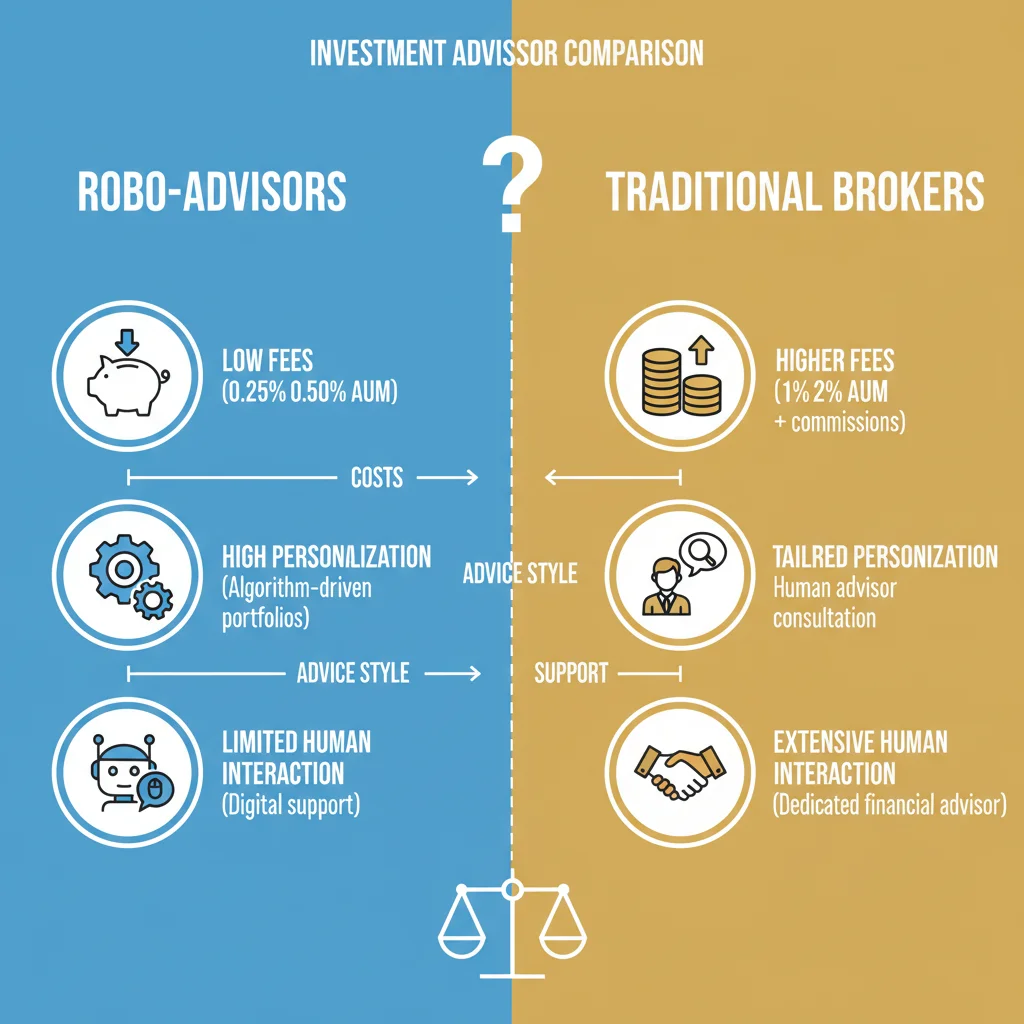
Lower Fees: This remains one of the most significant selling points. Robo-advisors typically charge a fraction of what traditional advisors do, often ranging from 0.25% to 0.50% of assets under management (AUM) annually. This cost efficiency is a major factor in the robo vs traditional investing debate.
Accessibility and Low Minimums: Many robo-advisors require very low initial investment amounts, sometimes as little as $0 or $100, opening up investing to a broader demographic. They are available 24/7 online or via mobile apps, making investing convenient and accessible from anywhere.
Automated Rebalancing and Diversification: Portfolios are automatically rebalanced to maintain the target asset allocation, ensuring diversification and adherence to the investor’s risk profile without manual intervention.
Tax Efficiency: Advanced robo-advisors in 2026 offer sophisticated features like tax-loss harvesting, which can significantly reduce an investor’s tax burden by selling investments at a loss to offset capital gains.
Emotional Discipline: By removing human emotion from investment decisions, robo-advisors help investors stick to their long-term strategy, avoiding impulsive reactions to market fluctuations.
Advanced AI-Driven Insights: The year 2026 sees robo-advisors leveraging AI to provide more nuanced market insights, predictive risk assessments, and even some level of personalized financial goal tracking beyond what was available just a few years prior.
Potential Downsides of Robo-Advisors
Limited Human Interaction: While some hybrid models exist, pure robo-advisors offer minimal to no human advice. This can be a drawback for investors who prefer a personal relationship with an advisor, especially during complex financial situations or emotional market downturns.
Less Customization: Although personalization has improved, robo-advisors still operate within predefined algorithms. They may not cater to highly specific or complex financial situations that require bespoke solutions.
Lack of Holistic Financial Planning: While some offer basic financial planning tools, they generally don’t provide comprehensive services like estate planning, intricate tax strategies, or business financial advice, which are staples of traditional brokers.
Technology Dependence: Users must be comfortable with digital platforms and managing their accounts online. Technical glitches or security concerns, though rare, can be a point of anxiety.
Traditional Brokers and Financial Advisors in 2026: Enduring Value
Despite the rise of automated investing, traditional brokers and human financial advisors continue to hold a significant place in the investment world. In 2026, their value proposition has sharpened, focusing on personalized relationships, comprehensive financial planning, and expert guidance through complex financial landscapes. For many, the human element in robo vs traditional investing remains irreplaceable.
Defining Traditional Brokers and Financial Advisors
Traditional brokers, often referred to as financial advisors or wealth managers, are human professionals who provide personalized investment advice, financial planning, and portfolio management services. They can work independently, for large brokerage firms, or as part of wealth management companies. Their services typically extend beyond just investments to encompass a client’s entire financial life.
Unpacking the Benefits of Traditional Brokers in 2026
Personalized Relationship and Trust: The cornerstone of traditional advising is the personal relationship. Advisors get to know their clients’ unique circumstances, fears, and aspirations, building trust over time. This human connection is invaluable, especially during life-altering events.
Comprehensive Financial Planning: Beyond investments, traditional advisors offer holistic financial planning services. This includes retirement planning, estate planning, insurance needs analysis, tax strategy, college savings, and business succession planning. They act as a financial quarterback for all aspects of a client’s wealth.
Complex Situations and Niche Needs: For individuals with complex financial situations – such as high net worth, multiple income streams, business ownership, or specific philanthropic goals – traditional advisors can craft tailored strategies that robo-advisors cannot.
Emotional Support and Behavioral Coaching: During market downturns or periods of uncertainty, a human advisor can provide reassurance, prevent impulsive decisions, and help clients stick to their long-term plan. They offer behavioral coaching that algorithms simply cannot replicate.
Access to Exclusive Investments: Some traditional brokers may offer access to a broader range of investment products, including alternative investments, private equity, or specialized funds not typically available on robo-advisor platforms.
Proactive Tax Strategies: While robo-advisors offer tax-loss harvesting, human advisors can implement more intricate, proactive tax planning strategies that consider an individual’s entire tax situation, not just their investment portfolio.
Drawbacks of Traditional Brokers
Higher Fees: This is often the most significant deterrent. Traditional advisors typically charge higher fees, often 1% or more of AUM, or commission-based fees, which can eat into returns over the long term. This is a critical point when considering robo vs traditional investing.
Minimum Investment Requirements: Many traditional advisors have higher minimum investment thresholds, often $100,000 or more, making them inaccessible to smaller investors.
Potential for Conflicts of Interest: While fiduciary standards are becoming more prevalent, some brokers may still be compensated by commissions on products they sell, potentially leading to conflicts of interest. Investors must ensure their advisor is acting in their best interest.
Slower Pace: The human element means processes can sometimes be slower compared to the instantaneous nature of robo-advisors.
Advisor Availability: You are tied to the advisor’s working hours and availability, which might not always align with your immediate needs.
Robo vs Traditional Investing: A Head-to-Head Comparison for 2026
To make an informed decision, let’s directly compare robo-advisors and traditional brokers across several key metrics relevant in 2026.
Cost Structure
Robo-Advisors: Generally much lower, typically 0.25% – 0.50% AUM. Some may have flat monthly fees or offer free basic services.
Traditional Brokers: Generally higher, often 0.75% – 1.5% AUM, or commission-based fees.
Personalization and Customization
Robo-Advisors: Good for standard portfolios based on risk tolerance; improving with AI for some niche goals but still largely algorithm-driven.
Traditional Brokers: Highly personalized, capable of tailoring strategies for complex financial situations, unique assets, and specific life goals.
Human Interaction and Support
Robo-Advisors: Minimal to none, though hybrid models offer limited access to human advisors.
Traditional Brokers: Core offering is direct, ongoing human interaction and support.
Investment Scope
Robo-Advisors: Primarily ETFs and mutual funds, often focusing on broad market exposure.
Traditional Brokers: Wider range of investments, including individual stocks, bonds, alternative investments, and private placements.
Financial Planning Services
Robo-Advisors: Basic goal-based planning (e.g., retirement, college savings), improving with AI integrations.
Traditional Brokers: Comprehensive financial planning covering all aspects of wealth management, including estate, tax, and insurance.
Minimum Investment
Robo-Advisors: Often $0 – $5,000, making them highly accessible.
Traditional Brokers: Typically $50,000 – $500,000+, depending on the firm and services.
Technology Integration
Robo-Advisors: Technology is the foundation; cutting-edge AI, machine learning, and intuitive user interfaces are standard.
Traditional Brokers: Increasingly adopting technology for client portals, reporting, and communication, but human interaction remains central.
Hybrid Models: The Best of Both Worlds in 2026?
Recognizing the strengths of both approaches, many firms in 2026 offer hybrid models that combine automated investing with access to human advisors. These platforms aim to strike a balance between affordability and personalized guidance, bridging the gap in the robo vs traditional investing debate.
How Hybrid Models Work
Hybrid models typically automate portfolio management like a robo-advisor but provide clients with the option to consult with a human financial advisor when needed. This access might be limited to specific hours, a certain number of calls per year, or for specific planning sessions. Fees for hybrid models usually fall between those of pure robo-advisors and traditional brokers.
Who Benefits from Hybrid Models?
These models are ideal for investors who:
Appreciate the cost-effectiveness and automation of robo-advisors.
Desire occasional human advice for complex decisions or reassurance during market volatility.
Have slightly more complex financial situations than a pure robo-advisor can handle but don’t require full-service wealth management.
Are comfortable with technology but still value the human touch.
Choosing Your Investment Path: Factors to Consider in 2026
The decision between robo vs traditional investing is highly personal. Here are key factors to weigh as you consider your options in 2026:
Your Investment Knowledge and Experience
New Investors/Limited Knowledge: Robo-advisors are excellent for beginners, simplifying the investment process and providing diversified portfolios.
Experienced Investors: May prefer traditional brokers for advanced strategies or robo-advisors for specific, hands-off accounts.
Your Financial Goals and Complexity
Simple Goals (e.g., retirement, college savings): Robo-advisors are often sufficient.
Complex Goals (e.g., estate planning, business succession, multiple properties): Traditional advisors are better equipped to handle these intricate needs.
Your Risk Tolerance
Both platforms assess risk tolerance, but a human advisor can delve deeper into the psychological aspects of risk and provide tailored emotional support.
Your Budget and Fee Sensitivity
Cost-Sensitive: Robo-advisors offer a more affordable entry point.
Value Comprehensive Service: Willingness to pay higher fees for personalized, holistic advice points towards traditional brokers.
Your Desire for Human Interaction
Prefer Self-Service: Robo-advisors are ideal.
Value Personal Relationship: Traditional brokers or hybrid models are more suitable.
Your Time Commitment
Hands-Off Approach: Robo-advisors automate most tasks.
Engaged Approach: Traditional advisors require more direct interaction and decision-making input from the client.
The Future of Robo vs Traditional Investing in 2026 and Beyond
The financial advisory landscape in 2026 is one of convergence and specialization. While robo-advisors continue to innovate with AI and machine learning, traditional brokers are integrating technology to enhance their client experience and efficiency. The distinction between robo vs traditional investing is blurring, with hybrid models becoming increasingly popular.
We can expect robo-advisors to offer even more sophisticated algorithms, potentially incorporating alternative data sources and predictive behavioral finance to tailor advice. Traditional advisors will likely leverage AI tools to automate administrative tasks, freeing them up to focus on high-value, complex client needs and emotional coaching. The emphasis will be on providing a seamless, personalized, and efficient experience, regardless of the platform chosen.
Making Your Final Decision
Ultimately, the best investment platform for you in 2026 depends on your individual circumstances. There’s no one-size-fits-all answer in the robo vs traditional investing debate. Consider starting with a robo-advisor if you are a new investor, have straightforward financial goals, and are looking for a low-cost, automated solution.
If you have a substantial amount to invest, complex financial needs, or simply prefer the peace of mind that comes with a dedicated human advisor, a traditional broker or a hybrid model might be a better fit. Many investors even use a combination, employing a robo-advisor for simpler accounts (like a Roth IRA) and a human advisor for more complex wealth management or specific long-term planning.
Before committing, research several platforms, compare their fees, services, and features. Read reviews, and if considering a human advisor, schedule initial consultations to find someone whose expertise and personality align with your needs. The goal is to find a partner that empowers you to achieve your financial goals effectively and confidently in the years to come.
Conclusion: Empowering Your Investment Journey in 2026
The choice between robo vs traditional investing in 2026 is a nuanced one, influenced by a myriad of factors unique to each investor. Robo-advisors offer an accessible, cost-effective, and technologically advanced solution for automated portfolio management, ideal for those seeking efficiency and a hands-off approach. Traditional brokers, on the other hand, provide invaluable personalized guidance, comprehensive financial planning, and emotional support for complex financial situations and those who value a deep human connection.
As the financial landscape continues to evolve, hybrid models are emerging as a compelling middle ground, offering a blend of automation and human expertise. By carefully evaluating your investment goals, risk tolerance, budget, and preference for human interaction, you can confidently select the platform that will best support your journey toward financial prosperity in 2026 and beyond. The key is to be informed, strategic, and proactive in managing your wealth, leveraging the best tools available to you.
Matheus Neiva has a degree in Communication and a specialization in Digital Marketing. Working as a writer, he dedicates himself to researching and creating informative content, always seeking to convey information clearly and accurately to the public.