The Behavioral Science of Wealth: Decoding Economic Trends for Smarter Decisions
Discover the hidden psychological forces that dictate your financial choices. This guide unpacks common cognitive biases, the neuroscience of spending, and data-driven strategies to help you master your money, from daily budgets to long-term investments.
By: Lara Barbosa on September 30, 2026
Why does a $5 coffee bought with a gift card feel free, while the same purchase from your checking account feels like a small failure? We believe our financial lives are governed by spreadsheets and logic, but the truth is far more primal. Every decision, from buying that coffee to selling a stock, is a battle waged inside our own minds—a conflict between ancient survival instincts and the complex demands of the modern economy.
This internal struggle is the focus of behavioral economics, a field that merges psychology with financial theory. It reveals that we are not the rational actors we pretend to be. Instead, our brains are riddled with cognitive biases, mental shortcuts, and emotional triggers that quietly dictate our spending, saving, and investing habits. These aren’t personal failings; they are universal features of human psychology that marketers and financial markets have learned to exploit with remarkable precision. Understanding these hidden forces is no longer optional—it’s the key to financial self-defense.
What if you could learn the rulebook for this internal game? This article decodes the behavioral science of wealth. We will unpack the specific cognitive biases that lead to poor spending, explore the neuroscience that drives frugal habits (or a lack thereof), and provide a data-driven look at how investor psychology shapes market outcomes. By the end, you’ll be equipped with practical, science-backed strategies to short-circuit your worst impulses and make smarter, more intentional decisions with your money.
Unpacking Cognitive Biases in Economic Behavior
We like to think of our financial choices as rational, calculated moves based on hard data. The reality is much messier. Our brains are hardwired with mental shortcuts, or cognitive biases, that quietly influence nearly every economic decision we make, from buying groceries to picking stocks. These are not character flaws; they are features of human psychology that helped our ancestors survive but can wreak havoc on a modern portfolio.
One of the most common culprits is anchoring bias. This is our tendency to rely heavily on the first piece of information offered when making decisions. For instance, a stock’s 52-week high price can act as an anchor, making the current price seem like a bargain even if the company’s fundamentals have deteriorated. It’s like seeing a sweater marked down from $200 to $80; the $200 anchor makes $80 feel like a steal, regardless of the sweater’s actual worth. This single bias can lead to a host of common mistakes in frugal living and smart spending.
Then there’s the powerful pull of herd mentality. Humans are social creatures, and our instinct is to follow the crowd. When everyone is rushing to buy a particular cryptocurrency or invest in a hot tech startup — a classic ‘fear of missing out’ scenario — the pressure to join in can be immense. Research from the Yale School of Management suggests that this behavior is a significant driver of market bubbles, showing that investors are often more influenced by the actions of their peers than by their own analysis. People just assume the crowd knows something they don’t.
How Biases Shape Spending Habits
These mental shortcuts don’t just affect big investments; they shape our daily spending in subtle ways. Confirmation bias, for example, leads us to seek out information that confirms our pre-existing beliefs. If you believe a certain brand of electronics is the best, you’ll likely only read reviews that praise it, ignoring negative feedback and potentially overpaying for a product when a better, cheaper alternative exists.
So how does this actually impact your wallet? It means you might stick with an underperforming bank or an expensive subscription service simply because you’re used to it (status quo bias). Or you might overestimate your ability to pay off credit card debt in the future (optimism bias), leading to poor financial health. Understanding these psychological undercurrents is the first step toward developing smarter spending habits that align with your long-term goals.
The underrated factor here is that these biases often work in concert, creating a potent mix that makes objective decision-making incredibly difficult. Acknowledging their existence is the key first move toward building a more resilient financial strategy.
The Neuroscience of Frugal Living: Beyond Simple Budgeting
Living frugally isn’t just about willpower or finding the best coupons; it’s a complex interplay of brain chemistry and psychological conditioning. Understanding the neurological underpinnings of your financial habits can be the key to unlocking consistent savings. The battle between spending and saving often takes place in the brain, specifically between the impulsive limbic system and the thoughtful prefrontal cortex. It’s a biological tug-of-war.
What most people miss is how deeply ingrained these responses are. When you successfully save money, you are essentially retraining your brain to prioritize long-term rewards over immediate, fleeting satisfaction. This process is similar to building muscle at the gym—it requires consistent effort and creates lasting change in your neural pathways, making future frugal decisions easier.
Cultivating Financial Discipline: Brain Training for Savings
Your brain’s prefrontal cortex is the CEO of your financial life, responsible for executive functions like planning, decision-making, and self-control. When you choose to save for a down payment instead of buying a new gadget, you’re flexing this mental muscle. Studies in neuroeconomics, a field that blends neuroscience, psychology, and economics, show that individuals with stronger activity in this brain region are better at delayed gratification. They can more easily visualize and connect with their future selves.
This isn’t just theory. You can actively strengthen this part of your brain through mindfulness exercises and consistent goal-setting. It’s about making the future feel more tangible and immediate than the present desire to spend.
The Role of Dopamine in Spending
Every time you make a purchase—especially an unplanned one—your brain releases a small hit of dopamine, the neurotransmitter associated with pleasure and reward. This creates a powerful feedback loop. The anticipation of the purchase can be even more potent than the purchase itself. Why does this matter? Because retailers and marketers are experts at triggering this response, using flash sales and limited-time offers to create a sense of urgency that short-circuits your prefrontal cortex.
This dopamine rush is like a sugar high; it feels good for a moment but often leads to a crash later, which in financial terms is known as buyer’s remorse. Recognizing this biological trigger is the first step toward controlling impulsive behavior and mastering the art of smart spending strategies for today’s economy.
Psychological Barriers to Frugality
One of the biggest hurdles to saving is the abstract nature of modern money. The “pain of paying,” a concept explored by behavioral economists, describes the tangible discomfort we feel when physically handing over cash. Credit cards and digital payments almost completely eliminate this sensation. An MIT study found that people are willing to spend up to 83% more when using a credit card instead of cash. They’ve effectively anesthetized the part of the transaction that makes us pause and reconsider.
This disconnect makes it easy to fall into common financial traps that derail even the best intentions. To counter this, some people revert to cash-only systems, like the envelope method, to reintroduce that healthy friction into their spending habits. It’s a simple trick that works with your brain’s natural wiring, not against it.
Overcoming Instant Gratification
The desire for immediate rewards is a powerful, primal urge. Our brains evolved in an environment where waiting for a better opportunity was risky — a bird in the hand was literally worth two in the bush. To overcome this, you need to make the future reward more compelling than the present temptation. This is where visualization comes in; vividly imagining your debt-free life or your comfortable retirement can activate the same reward centers as an impulse purchase.
A practical technique is the 30-day rule: if you want to make a non-necessary purchase, wait 30 days. Surprisingly often, the desire fades as the initial dopamine trigger subsides. This enforced waiting period gives your prefrontal cortex time to catch up and assess whether the purchase aligns with your broader financial goals. This isn’t about deprivation; it’s about conscious, intentional spending.
The psychological pain of losing is roughly twice as powerful as the pleasure of gaining. This principle explains why we irrationally hold onto losing stocks for too long and sell winning stocks too early.
— Principle from the work of Daniel Kahneman, Nobel laureate in Economics
Cognitive Bias / Concept
Impact on Financial Decisions
Anchoring Bias
Over-relying on the first piece of information (e.g., a high initial price), making subsequent ‘sale’ prices seem better than they are.
Herd Mentality
Following the crowd into popular investments or spending trends out of a fear of missing out (FOMO), often ignoring fundamentals.
Loss Aversion
Feeling the pain of a loss about twice as intensely as the pleasure of a gain, leading to holding losing investments too long.
Mental Accounting
Treating money differently based on its source (e.g., a bonus vs. savings), leading to frivolous spending of ‘found’ money.
Dopamine Rush
The brain’s reward system releases dopamine during a purchase, creating a feedback loop that encourages impulsive buying.
Behavioral Economics and Investment Basics: A Data-Driven Perspective
Just as our minds can trick us into poor spending habits, they are equally capable of sabotaging our investment returns. The principles of behavioral finance reveal that humans are not the rational economic actors that classic theories once assumed. Our brains, which evolved for survival on the savanna, are surprisingly ill-equipped for the digital ticker tape of modern financial markets. What most people miss is that successful investing is often less about complex math and more about mastering your own psychology.
Understanding Investor Biases in Market Cycles
Two of the most powerful biases that derail investors are loss aversion and overconfidence. Groundbreaking research by psychologist Daniel Kahneman found that the psychological pain of losing money is roughly twice as powerful as the pleasure of gaining an equivalent amount. This leads to irrational behavior, such as holding onto losing stocks for too long in the hope they will recover (to avoid realizing the loss) while selling winning stocks too early to lock in a small gain. You essentially cut your flowers and water your weeds.
Overconfidence is the other side of that dangerous coin. After a few successful trades, it’s easy to believe you have a special insight into the market. This bias was on full display during the dot-com bubble of the late 1990s, when many novice investors, flush with early gains from tech stocks, poured their life savings into speculative companies with no profits. When the bubble burst, many were wiped out. The data suggests this isn’t an isolated event; a recurring DALBAR study shows the average equity fund investor’s return consistently lags the S&P 500 index, sometimes by as much as 1.7 percentage points annually, largely due to emotionally-driven timing mistakes.
The Fear and Greed Index Explained
To quantify this market sentiment, some analysts turn to tools like the CNN Business Fear & Greed Index. This index consolidates seven different indicators—including market momentum, junk bond demand, and put/call options—into a single number from 0 to 100. A low number indicates extreme fear is prevalent, while a high number signals significant greed. Is this a perfect predictor of market turns? Of course not. But it serves as a useful gauge of whether crowd psychology is reaching a dangerous extreme, providing a moment for a rational investor to pause and question the herd mentality.
Strategies to Mitigate Emotional Investing
Recognizing these biases is the first step, but how do you actually combat them? The most effective strategy is to build a system that removes your emotional self from day-to-day decisions. This involves creating a written Investment Policy Statement (IPS), which is essentially a contract with your future, panicked self. This document outlines your goals, risk tolerance, and rules for buying and selling, providing a logical framework when emotions are running high.
Automation is your best friend in this fight. By setting up automatic, recurring investments into a low-cost index fund—a strategy known as dollar-cost averaging—you buy consistently, regardless of market headlines. This disciplined approach helps you buy more shares when prices are low and fewer when they are high, sidestepping the temptation to time the market. A well-structured plan is the core of any comparison between frugal living, smart spending, and investing.
Diversification as a Behavioral Hedge
Finally, diversification is more than just a portfolio management technique; it’s a powerful behavioral tool. Holding a mix of non-correlated assets (like stocks, bonds, and real estate) acts like shock absorbers on a car driving over a bumpy road. The ride is smoother.
A non-diversified portfolio experiences wild swings, which can fuel overconfidence during the highs and trigger panic-selling during the lows. A properly diversified portfolio mutes these extremes. This reduces the likelihood that you’ll make a rash decision based on fear or greed, helping you steer clear of the most common mistakes in frugal living and smart spending that arise from emotional reactions. The goal isn’t to eliminate risk but to manage your reaction to it, ensuring you can stay invested long enough for your strategy to work.
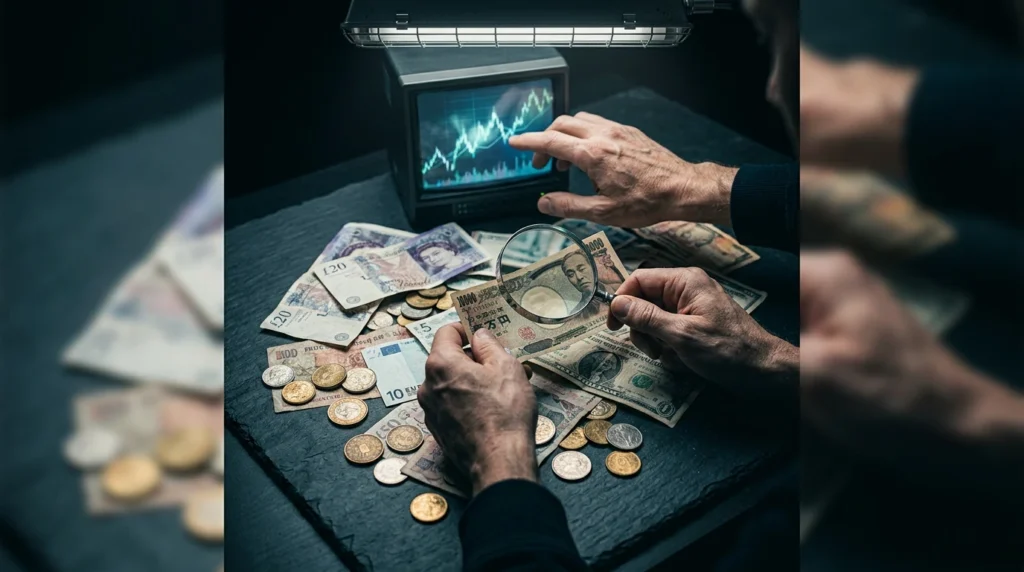
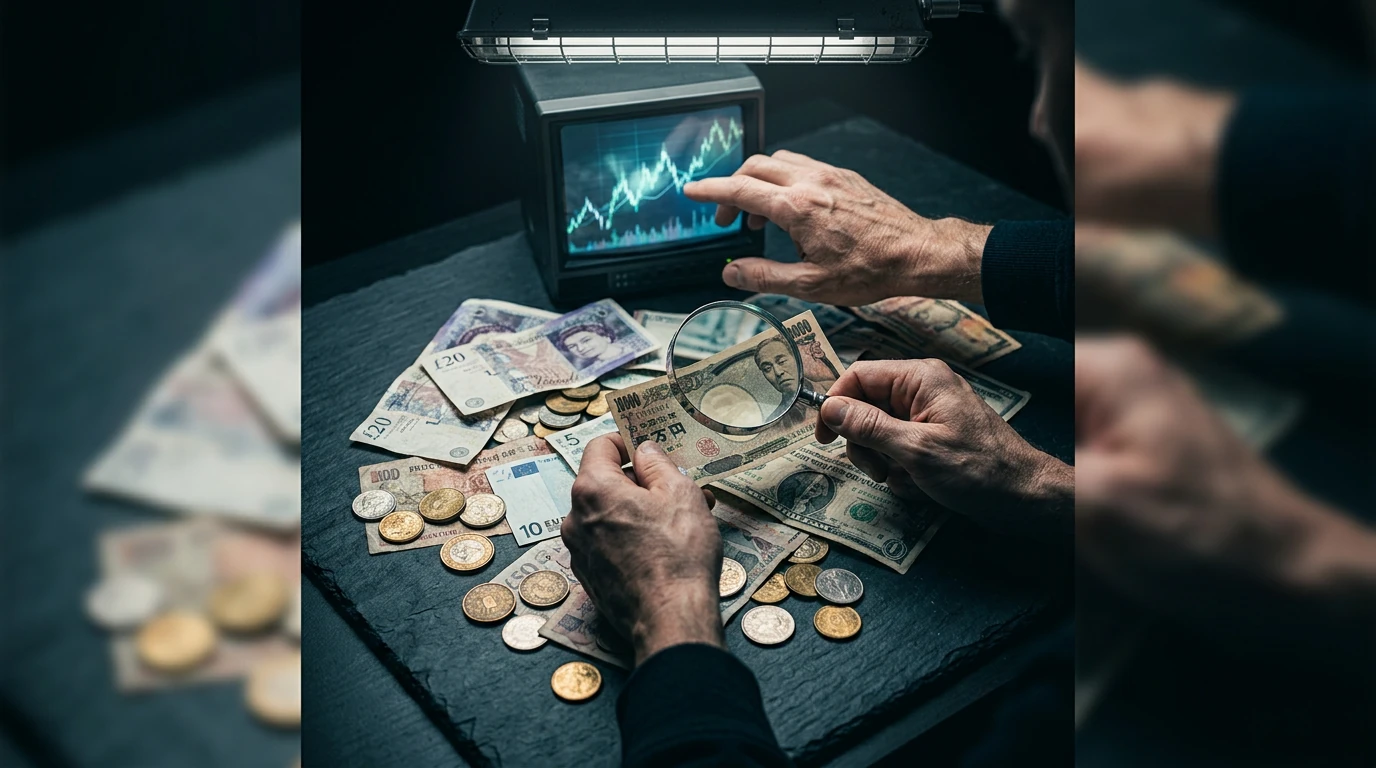
Hands examining diverse banknotes and coins on a slate table, with a magnifying glass and a flickering market trend graph in the background, illustrating cognitive biases in financial decision-making.
Smart Spending: Applying Psychological Insights for Optimal Value
Just as our minds can play tricks on us in the stock market, they are equally susceptible to manipulation at the cash register. The entire field of smart spending isn’t just about finding coupons; it’s about understanding the psychological triggers that retailers use to influence our decisions. What most people miss is that every store layout, price tag, and promotional offer is designed based on decades of consumer behavior research. Mastering your money requires understanding these forces.
We often engage in what behavioral economists call “mental accounting.” This is the tendency to treat money differently depending on its source or intended use. For example, a $200 bonus feels like “fun money” and is spent easily, while a $200 withdrawal from savings for the same item feels painful. This irrational separation of funds is a major hurdle, but recognizing it is the first step toward implementing better smart spending strategies for today’s economy.
The Illusion of Discounts: How We Perceive Value
Retailers are masters of the framing effect, which is how the presentation of information influences our perception. A product’s value seems to skyrocket when it’s presented as a discount. A classic study from the University of Chicago found that an identical catalog item sold significantly better when it was introduced with the text “Sale” versus “Low Price.” There was no actual price difference. It’s the perception of a deal—the feeling of outsmarting the system—that drives the purchase.
This is especially true with anchoring. A shirt with a tag that says “$100, now $49” feels like a massive victory. Our brain anchors on the initial $100 price, making the $49 seem incredibly cheap. But what if the shirt was only ever worth $40 to begin with? Without the anchor of the original price, would you still have bought it? This is a core psychological tactic you must learn to identify to avoid common financial traps.
Here are a few psychological hacks for more conscious consumption:
Reframe the cost in hours: Don’t think of an item as costing $150. If you make $30 an hour, that’s five hours of your life. Is the item worth five hours of work?
Implement a 24-hour rule: For any non-necessary purchase over a certain amount (say, $50), wait 24 hours before buying. This short circuits the impulse-driven part of your brain.
Analyze the price ending: Be wary of prices ending in .99 or .97. This “charm pricing” is designed to make you perceive the price as lower by focusing on the left-most digit. A price of $49.99 feels much closer to $40 than it does to $50.
Question the urgency: “Limited time only” and “low stock” alerts create artificial scarcity. Ask yourself if you would still want the item with the same intensity if you knew it would be available anytime.
Ultimately, becoming a smarter spender isn’t about depriving yourself of joy. It’s about ensuring your money is spent with intention—on things that genuinely add value to your life—rather than being subtly directed by a marketer’s playbook. This awareness is a key component of decoding economic shifts for your personal finances.
Predicting Economic Shifts: The Human Factor in Macroeconomics
Individual spending habits are just one side of the coin; collective psychology shapes entire economies. When millions of people feel optimistic, they spend more freely, fueling growth. This is measured by indicators like the University of Michigan’s Consumer Sentiment Index, which tracks public attitude about personal finances and the national economy. Feelings become facts.
This group dynamic often leads to herd behavior, where individuals follow the actions of a larger group, sometimes ignoring their own information. Think of it like everyone suddenly switching lanes on the highway because a few cars did—it can either clear a path or cause a massive jam. In finance, this can inflate asset bubbles or accelerate market crashes, and understanding it is part of developing smarter spending habits. Are you making a choice, or just following the crowd?
The data suggests a direct link. According to research from The Conference Board, its Consumer Confidence Index has shown a correlation of approximately 71% with household spending patterns. What many people don’t realize is that this isn’t just about Wall Street—it’s about everyday people deciding whether to buy a new refrigerator or hold off for another six months. Following the herd without thinking is one of the classic financial traps to avoid.
Understanding these psychological undercurrents doesn’t give you a crystal ball. Instead, it serves as a valuable weather report, helping you prepare your own financial strategy rather than getting swept away by the tide. Recognizing these patterns is a key theme in many expert insights on navigating economic shifts.
Building Resilience: A Behavioral Framework for Financial Well-being
Understanding broad economic trends is only half the equation; the other half involves managing your own internal economy. True financial resilience isn’t built on one big stock market win, but on a series of small, intentional habits designed to counteract our own worst impulses. The underrated factor here is acknowledging that our brains often prioritize immediate gratification over long-term security. It’s a design flaw we have to work around.
One of the most effective behavioral interventions is simply automating your financial decisions. By setting up automatic transfers to savings or investment accounts the day you get paid, you pre-commit to your goals before your brain can talk you out of it. What most people miss is how this simple action sidesteps decision fatigue — think of it as setting your financial coffee maker on a timer. According to research from the National Bureau of Economic Research, households with automated savings plans accumulate wealth 2.5 times faster than those who save manually. This is a primary strategy for avoiding common financial traps driven by impulse.
This single step removes the daily willpower battle.
Conversely, you can add “positive friction” to curb poor spending. Dr. Elias Vance, a behavioral economist at Stanford, suggests that small obstacles can dramatically alter outcomes. For instance, deleting saved credit card information from online stores forces you to physically get your card and reconsider the purchase. Is a minor inconvenience worth it for better financial health? For most people, the data suggests it is. Learning to apply these small nudges is part of the expert insight needed to navigate economic shifts effectively. These small, consistent actions compound over time, building a foundation that can weather nearly any storm.
From Awareness to Action: Architecting Your Financial Environment
Understanding the psychological quirks that drive your financial behavior is a profound first step, but awareness alone doesn’t build wealth. The real power comes from using this knowledge to become the architect of your own financial environment. You now know that your willpower is a finite resource, that digital payments numb the pain of paying, and that your brain’s reward system can be easily hijacked. The critical question is no longer ‘Why do I do this?’ but rather, ‘How can I design a system where the right choice is the easiest choice?’
Instead of fighting a constant battle against your own instincts, you can create friction for bad habits and smooth pathways for good ones. This might mean automating investments to bypass your emotional reactions to market news, using a cash-only budget for discretionary spending to reintroduce the ‘pain of paying,’ or simply unfollowing social media accounts that trigger comparison and impulse buys. Ultimately, financial success isn’t about having more discipline; it’s about building a smarter playground for your brain to operate in. Knowing the game is one thing, but are you ready to redesign the board itself?
Frequently Asked Questions
How do emotions influence investment decisions?
Emotions like fear and greed are major drivers of poor investment choices. Fear, fueled by loss aversion, can cause you to panic-sell during market downturns. Greed, driven by herd mentality, can lead you to buy into speculative bubbles at their peak, ignoring risks in the process.
Can understanding cognitive biases really improve my financial situation?
Absolutely. By recognizing biases like anchoring or confirmation bias, you can create systems to counteract them. For instance, creating a checklist for large purchases or enforcing a 24-hour waiting period can prevent you from making costly, impulsive decisions based on flawed mental shortcuts.
What is ‘mental accounting’ and how does it affect my spending?
Mental accounting is the irrational tendency to categorize and treat money differently depending on its origin. You might easily spend a tax refund on luxuries because it feels like ‘found money,’ while you would guard the same amount if it came from your regular salary. This leads to inconsistent and often poor spending habits.
Are there specific psychological techniques for saving more effectively?
Yes, two powerful techniques are increasing friction and visualization. Using cash instead of cards reintroduces the ‘pain of paying,’ which curbs spending. Vividly visualizing your future goals, like retirement, activates the brain’s reward centers, making the long-term benefit feel more compelling than a short-term purchase.
How can I avoid common financial pitfalls related to human psychology?
The most effective method is to build a system that removes emotion from your decisions. This includes creating a written investment policy statement (IPS) to act as a rulebook during market volatility, automating your savings and investments, and diversifying your portfolio to smooth out returns and reduce panic-inducing swings.
Lara Barbosa has a degree in Journalism, with experience in editing and managing news portals. Her approach combines academic research and accessible language, turning complex topics into educational materials of interest to the general public.